17. Laundry treasure


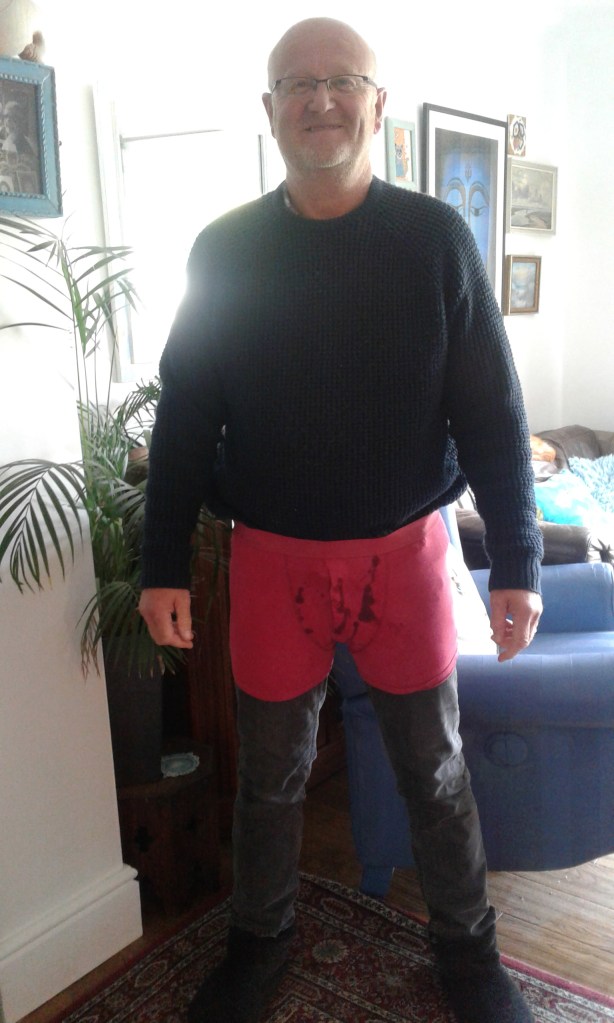
The weekend just gone might be comparable to a snugly fitting pair of jeans. Now it’s time to dip into the laundry basket for some unwashed underpants that need to see the light of day.

There is a legacy of anger within me, which rarely finds honest expression. The last time that I hit somebody, aged 19, earned me an Actual Bodily Harm conviction. Yet, despite my 61 years of age, a recurring reverie involves violence against Manchester United football legends Alex Ferguson and Roy Keane.

In the fantasy, I am playing against Keane, who has kicked or intimidated every player on our team. After he sends me flying, with a borderline-legal tackle, I walk across and pick him up, one-handed, by the neck. Holding him out at arms’ length as he struggles and curses, I walk to the crowd and throw him about 20 yards in. Ferguson is coming for me now, red-faced and bug-eyed, steaming from each ear. I pick him up similarly, and send him flying onto Keane. Then run down the tunnel, arm punching the air, to the cheers of our home crowd.

Interviewed by quote-hungry media, I transgress every tacit rule of soccer diplomacy. “Somebody had to sort both of them out. The ref couldn’t control him, and Ferguson wouldn’t.”

The details can vary slightly, but this is my most common reverie. Perhaps even more juvenile is another where I am backed up against a wall, maybe in a prison yard or urban alleyway. The mob/gangsters/hoodlums/bullies are about to tear me to pieces. But they are unaware of my darkest martial arts. I rise off the ground, kicking both legs in opposite directions and physically removing the heads from two of my attackers. The carnage continues, until a pile of bodies accumulates. I know their associates will come next, and that – like Charles Bronson in The Vigilante – I will maintain the fight to de-scum my locality.

There is a cognitive dissonance to both these fictions, because the precise situations can never occur in this reality. That’s a polite way of saying that some might consider these admissions as a form of mental illness. I believe the wellspring for these visions lays back in my childhood.

More feasible, sane and communally robust is the imaginative scenario where bailiffs come to take away whatever few assets I hold, due to unpaid debts. The bailiffs are prevented from entering the property by endless concentric rings of local people who are determined to uphold common decency over the lop-sided commercial law. For every new set of authorities that arrive to back the bailiffs, the protective human layers double.

If China’s recent roll out of “social credits” – i.e. Pavlovian awards for “correct” behaviour, and holding “correct” opinions – ever takes full hold in the West, I am surely doomed. And there is so much more in my laundry basket.

Luke 8:17
For nothing is secret, that shall not be made manifest;
neither anything hid, that shall not be known…


20181002_101914


16. Big souls


download (2)


I kicked further back into life this weekend.

Jono invited Maureen and I to join him in celebrating his wife Gina’s birthday at an Airbnb location in Suffolk. The accommodation was decent enough, in the annexe of a large house buried somewhere in the rurality of Nayland-with-Wissington. But the company was the thing. We hadn’t all met for over a year. The conversations ranged broadly. Starting with the necessary catch-ups, touring through our children’s and parents’ lives, touching on work and perennial financial struggles, blasting gustily through the ersatz political landscape and always landing most happily in a fecund bed of humour. A mini-Biscuit Factory.

The River Stour was our background companion. It showed us a calmly meandering route from the nearby church at Wiston, wIth its Norman architecture and dragon murals, along to the Anchor pub in Nayland, where we ate twice. It was also the location for our goodbyes, on the outskirts of Dedham, watching a playful herd of bulls from a riverside café. Best of all, we saw the sun set low on Saturday night from stunning vantage points over the widening river in Mistley and Manningtree.

river.jpg


river 2.jpg

The fish and chip shop in Manningtree High Street didn’t look too promising. Gaming machines, garish colours, strong smells of old fat, and hardly any food on display. The woman behind the counter was talking to a young man, advising that he take great care with his money. He had the directness that can accompany learning difficulties, as he asked a series of simple but pertinent questions to gain feedback on his financial situation. The woman patiently gave him a set of detailed answers, adroitly mixing the compassion and good sense of a mother with something of a policeman’s unquestionable authority.

The guy took a huge, humorous delight in pronouncing that there were only 87 days to Christmas. After he left, she told us that he had lost his mother and lacked a competent father. She helpfully steered us to where our meal, costing just over £16, could be eaten while we watched the Stour and the sky. Hundreds of waders exploiting the low tide were barely visible by the time that we munched our deliciously fresh fish and chips.

Two geese made the air wobble as they set sail inland. A train coursed along the opposite bank, heading for Colchester, lighted carriages contrasting with the blackening above us. Jono talked about Ezra, their son. Photography degree secured, he has decided to live in Glasgow, so that he can use the inspiration of nearby mountains and water to pursue his dream of becoming an artist. Rather than live with his talented girlfriend in London, Ezra has given himself 10 years to succeed. He will find a factory job for half of the week, and create in his own most unique ways for the remaining time. The regret of looking back and knowing that he failed to give his dream his best shot will not be Ezra’s.

On the way back, we discussed the notion that a voracious heterosexual encounter might leave ‘a whiff of penile cordite’ or female equivalents in the air. Gina later referred to ‘penile cordial’, which triggered raucous new suggestions.

The sun shone all weekend. West Ham beat Manchester United 3-1. I snuck into my wife’s bed on Sunday morning for a cuddle of outstanding quality.

Happy times.


dedham.jpg

15. Pterodactyls and Mr Bond


download


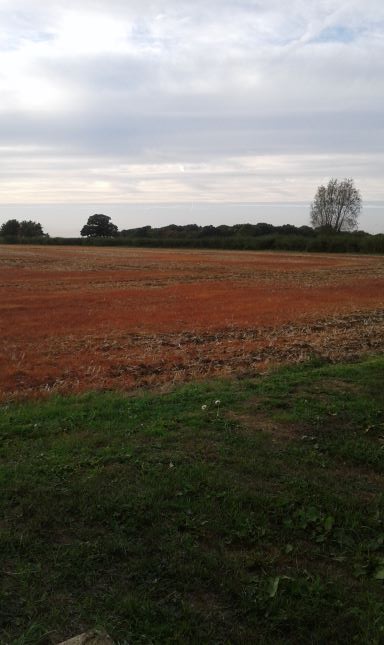
The move to Bowers Gifford in 1964 was a Godier win-win. Eric got his own garage and driveway, and Phyllis a home that was un-overlooked. Neil and I had a sizeable garden, and the back of the house was flanked by a barley field, with countryside stretching away in the distance. We had a coal cellar, whose door would flap free on windy nights and conjure images of ghouls. Dad upped the ante, by revealing that pterodactyls lurked under my bed. Needing the toilet in the night was torment. Creeping to the end of the bed, leaping off, and sprinting to the door before its jaws wrapped around my ankles.

I got a James Bond annual one Christmas. Dad took me to see the great man in Goldfinger, showing at a cinema in Southend, and then Zulu at the same emporium. The goodies triumphed. I rejoiced, and feverishly anticipated when I could start to slaughter hundreds of brown-skinned tribesmen. I practised killing hordes of Germans with my Action Man.

In my head I was already a son of the empire, further inspired by reading Biggles and Enid Blyton’s Famous Five. Neil and I would hunt for treasure in local woods and copses, whooping insanely at the discovery of old bits of plastic in ditches. Or we would take our bikes down Church Hill, accelerating down to the flat stretch and slamming on the brakes by the church gates. Once, just for the dare of it, I rode the bike into a small haystack placed by the local farmer at the foot of the hill. I lifted into the air and landed on the top, followed by the bike. Not a scratch. In later years I would stroll out on a summer’s day with an axe and a saw lifted from Eric’s garage, go to one of the local woods, and cut down a tree or two. It made me feel powerful and furtive.

Education took place at St Margarets, a nearby Church of England school. I was moved up a year at one stage to test me more fully. Mum would say later that it was a poor school. Great memories of snow in the schoolyard, and sliding through the mud in my new school shoes, to be bollocked furiously by my mother once home. I liked this lad called Alex Markham, and sprang to his defence one day over something trifling. We marched arm-in-arm around the playground, locked together in a best friend’s ritual.

Girls liked me. Jackeline Harvey gave me my first kiss outside the school chapel, a bliss that I still remember. We were boy- and girl-friend for two weeks, and then lost interest in each other. There were other lovelies, notably June Cooper and Ruth Miller, whose memories I could mourn, if pushed. Then Sally Cloe arrived at the school, in my last year. Sally had wicked eyes. No sooner had she transfixed one lad than she would be off to cajole the next target. She approached one day and gave me a huge kiss. Next day, she was snogging Ralph Cousins, and the day after that Richard Lovett. There was talk of divorced parents.

It mattered little, as sport had come to dominate my life. Our back garden was now a training ground for aspiring professional footballers. In summer, the cricket stumps and bat appeared. Dad joined in and made life hard for us, bowling fast and shooting hard. So we learned competitiveness alongside fun. Neil and I would play the minute we returned from school, sometimes knocking the small or large ball into Dad’s garage, where there worked – on a part-time basis – a local old boy named Tim. We were massively witty, and dubbed him “New Formula Vim”, the name of a cleaning product advertised on TV. The fact that Eric could employ somebody was a sign of financial progress, but we saw him only as a symbol of middle to old age, and a bugger to get the ball back from.

The first time I played cricket with a hard ball, at school, I knocked it to the boundary with ease, discovering a timing and fluency with the bat that would compress into images that I still carry around. Likewise, there was a soccer game between Green House and our biggest rivals, Blue. I received the ball on the right and cut infield before measuring an inch-perfect pass to Michael Bellamy on the left wing. Odd the things that we recall.

The only visit I can recall from my old friend fear came after I decided to punch a lad at school called Neil Driver. He was a tough lad, from a rougher part of Benfleet, but had said or done something that obviously called for a fist. I let him have it on the chin, like the cowboys in the films. But he didn’t seem to be hurt, unlike my knuckles. I legged it, and was wary of him for days afterwards.

In my last year I was chosen as school Head Boy. The main job was to accompany Leonard Sweet, the headmaster, as he swept into morning assembly, and to stand nearby as he drawled on. I sometimes pinched myself to remain alert, such was the tedium of the singing, prayer and sermons. One particularly wet winter lunchtime, I was scraping the mud off my school uniform in the toilets. These were covered in wet paper towels from other lads doing the same. In walked Mr Sweet. I guess he thought that I had single-handedly caused the carnage. He gave me a lecture on cleanliness and said I was the “worst head boy the school had ever had”.

My reaction was a thrill of recognition. Yes, yes, I probably am, I thought silently. One morning our form teacher, Mr Thompson, lost his rag at an ever-increasing volume of noise from the class. He was a frightening figure when he worked up a full head of steam, and his pistons were working overtime on this occasion, having warned us before about the noise.

Tommo lined himself up beautifully. “Do you think that I am going to waste my time, standing here, trying to educate you, trying to help you progress, while you make this noise?” he roared, voice shaking the windowpanes. Complete silence. I couldn’t resist. “Yes sir, I do.” Just for the walk into the unknown, and the dice with consequence. Another ride into the haystacks.

I was sent outside, given lines to write out, warned about my future behaviour. The respect this earned from my peers was enormous. I took some revenge, in my daft young head, by extracting and then wiping a string of large green bogies under my desk, which settled into a stalactite formation undiscovered by the cleaning ladies.

Not everyone will remember these days so happily. A girl in our year called Sharon Brown somehow acquired the nickname ‘Fleabag’. I don’t know how poor Sharon can have coped then, or in later life, with the stigma of that name. I recall her weeing herself in class once, and the smell of it on her clothes afterwards. I have thought hard about this, and cannot remember ever being personally unkind to Sharon. I don’t think it was in my nature. But I was as guilty as anyone by not standing up to those who wielded the ‘fleabag’ moniker. Maybe that stored up karma for me, down the line.

In the last year, I saw my first set of pictures involving naked women. In a copy of ‘Parade’ magazine, which was circulated around the top two years. It was mentally inflammatory material, clearly signalling an unknown world. I told Phyllis, as she did the ironing. She wasn’t as excited as me. Then discussed it over lunch next day with one of my brother’s friends, Stephen Harvey. Two years younger than me, he explained with confidence that babies were made by men inserting their willies in girls’ bottoms. I wasn’t so sure.

In my last year at St Margarets I hit a 97% score in my 11-plus, opening the doors for grammar school. No longer to be a big fish in a small pond.


14. Adult transgressions


images (10).jpg


Grown-ups also transgress, some more than others. 17 years and 16 days ago, the World Trade Center (WTC) twin towers in New York were flown into by hijacked commercial aircraft, after which they both later collapsed into their own footprint at freefall speed, each in about 12 seconds. Just under 3,000 innocent people died, and the world changed forever. Hundreds of thousands more deaths from Western invasions of Afghanistan and Iraq, huge waves of anti-Muslim sentiment, and major restrictions of personal freedoms across the world.

A business contact was in Nairobi airport, Kenya, as the first TV pictures of the events of September 11, 2001, were beamed across the world. He was horrified to see many locals standing and cheering. My gut reaction was anxiously polarised between deep compassion for the victims and their families, and a feeling that the world’s financial and military bully had taken a long-overdue punch on the nose.

I was later told, to my utter astonishment, that some people questioned the official narrative. About a decade after the event, I decided to take a look. It made little sense that Osama Bin Laden – surely the best source of 9/11 intelligence on the entire planet – had been summarily killed in May 2011, when eventually found in Pakistan. Should he not have been interrogated at length then tried in The Hague? US Navy Seals that swiftly dumped his body at sea then perished themselves in a helicopter crash. The story didn’t ring true.

I love to be fascinated. A treasure trove opened. As a starter, I found observers of 9/11 who questioned the almost immediate conclusion by US authorities that Osama Bin Laden and Al Qaeda had carried out the attacks, without any concerted investigation. Others queried the lengthy cell phone calls reported from United Airlines Flight 93, which crashed in Shanksville, Pennsylvania. They argued that cell phone technology in 2001 made it impossible for calls lasting much more than a few seconds at over 2,000 feet. My eyes were caught by the passport improbably found intact in the WTC debris, from a hijacker on American Airlines Flight 11, the plane that hit the North tower. This plane was quite literally subsumed within the building as aircraft fuel burned at anywhere between 800° to 1500°F.

The financial journalist in me gravitated naturally to the betting patterns seen in the days before September 11. In particular, an untoward level of speculation that American Airlines and United Airlines share prices would fall in the short-term. There was around 90 times the normal volume of financial market trading on this outcome. Yet the US Security and Exchange Commission stonewalled the investigation into potential financial collusion linked to 9/11 events by destroying the documentation. Another key clue from perhaps the greatest crime on US soil also disappeared. The physical evidence, the steel, was sold cheaply, shipped offshore and melted down, never to be investigated, analysed or used in court.

Steel, and its reaction to heat, was at the heart of massively differing interpretations of the twin tower falls. Both buildings were designed to withstand the impact of not one but two aircraft, and any type of fire. Never before, and never since, in the history of steel-framed buildings, has a conflagration caused the collapse of a steel-framed structure, even when the fires have burned for days. Nonetheless this happened – we saw it with our own eyes, replayed over and over again, until the images were lasered into our psyches. It was explained in the official July 2004 report that the plane fuel burned long enough and at a sufficient temperature to weaken the steel core of the buildings, causing the collapses.

Opposing this stance, a group entitled AE911Truth, comprising over 1,900 professionally qualified architects and engineers, from around the world, was insistent that the freefall collapse of the two buildings meant that they could only have been destroyed by controlled demolitions, literally carried out in plain sight. Their arguments and the counter-claims are too complex to detail, but it was intriguing that a number of firemen testified to tremendous explosions heard in the basements before the North and South Towers collapsed. On the other hand, I have a firefighter friend and a science teacher mate who both believe that buildings lost their structural strength through the heat generated by the plane crashes. Futile for a layman to even have an opinion.

Where it really began to fall apart, for me, was the “coincidence” involved in the strike on the Pentagon by Flight 77, which destroyed the building’s budget office. This just happened, by a matter of the purest chance, to contain the documents related to the previous day’s televised announcement by US Secretary of Defense Donald Rumsfeld that the Pentagon had ‘lost’ US$2.3 trillion. Not billion, trillion. The lost funds were written off, amid the 9/11 clamour. Never mind.

So I had to delve further into Flight 77. Three hijackers reportedly took the plane over out at Cleveland, Ohio, leaving NORAD plenty of time to scramble air defence system fighters, after the plane’s course deviation, and the loss of radio contact. But the craft was allowed to come back into Washington, where it made a descending 8,000 feet curve through 270 degrees, the sort that only an experienced military pilot might pull off, then vanished from radar screens. Before hitting its destination, the wings clipped a series of highway lamp-posts at 20 feet and a speed of 499 mph. Experienced pilots stated that a Boeing 757 would break up if flying that low, at that speed, and with those impacts.

The story became farcical, in my genuinely humble opinion. On the Pentagon lawn there were no bodies, seats or engine remains. The fire chief at the scene noted that he could see only small pieces of aircraft and no fuselage sections. The hole in the Pentagon did not show the width of a 757, yet was punched three walls deep by what was essentially a thin aluminium can. The Flight 77 story was supported only by statements from authorities. All amateur videos of the flight and impact were confiscated by the FBI. Media reported the Flight 77 story as if this all added up.

Any fool can speculate. I always need an unassailable fact to build a personal view around. It lay back in New York, where the sudden free fall of WTC Building 7 into its own footprint occurred at 5.20 p.m on September 11, some 370 feet to the north of WTC 1. WTC 7 was 47 stories tall, and collapsed in just over six seconds.

To reiterate, a third building collapsed, but no aircraft hit it. Three destroyed WTC buildings, two planes.

Video clips of Building 7’s demise are readily available on the internet, showing that the roof caved slightly and it fell straight down, as if all of the load bearing columns had given way at exactly the same moment – the classic signs of a controlled demolition. The official explanation was ‘office fires’ and the impact of debris from the twin towers. But lacking the “cover” of having been hit by an airliner, how could a solid steel structure collapse and plunge to the ground without encountering any resistance? The sole logical conclusion is that the public was lied to about WTC 7. The how and the why remain unknowns.

In the heat of the moment, anyone applying such critical thinking was labelled as a conspiracy theorist. No one was allowed to question the official narrative. “You are with us, or you are with the terrorists,” proclaimed US President Bush. And so the entire media establishment came to parrot a story that 19 men armed with box-cutters and directed by an ailing man in a cave thousands of miles away breached one of the most heavily defended airspaces on earth.

I would not dare to state that the moon landings were faked or that Lady Di was killed by British intelligence services, without some form of definitive evidence. Or that the Earth is flat, and surrounded by Antarctica, without laughing. But there are enough hard facts and gaping plot holes to indicate that the official 9-11 story is at best a highly deceptive obfuscation, and an insult to people’s intelligence at its worst.

One of my most logical friends asked a simple question. “Who, and why?” I had the answer to neither. Trying to establish what really happened would only add more conjecture in already muddied waters. But I would suggest a replacement question: “Who benefits?”

For sure, any company heavily involved in the armaments and security industries. More tentatively, any government seeking to expand its scope for spying on and controlling citizens. Without 9/11, neither the Patriot Act of October 24, 2001, nor the Homeland Security Act, in the following November, could have been justified. All of your online activity is now stored, removing any last vestiges of privacy. Meanwhile five countries in the wider Middle East – Afghanistan, Iraq, Libya, Syria and Yemen – have been pounded towards the stone age by Western bombs. Blowing children to pieces, triggering flows of desperate refugees to Europe. Trauma-based conditioning, across entire societies, backed by fifth-rate politicians and journalists, informs us that this is necessary to “defeat terrorism”.

So here is a last fact. Out in the public domain. So ironic, so Orwellian. The US is now on the side of Al Qaeda affiliates in Syria.

Nobody ever wants to admit they have been had. I hated having to change my opinion. But Eric banged “telling the truth” into my head, in his own inimitable way. So it was important to offer these thoughts, as September nears its end, before returning to life in Bowers Gifford.


images (8).jpg


13. Transgression


images (6)


My first real memory is my brother’s birth in May 1959. I was 26 months old. While mum was at Rochford hospital, my gran came down to Hadleigh from London to look after me. As I was playing in my sand-pit in the back garden, one of the structure’s brick walls fell and trapped me. Nanny came out, and freed me, after I had shouted for an eternity. The garden was my kingdom. I can recall meticulously constructing my own aircraft from bits of old wood, and the disappointment when it failed to take off.

Next door lived a girl called Beverley, a year older than me. I would poke my head over the fence trying to talk to her. She enjoyed arousing my interest and then walking away. Two doors away, I watched from the pavement as a man killed a snake with a spade. An adder, most likely out of its normal orbit in the long grass of the nearby rectory. He chopped its head off. This was the post WW2 era, when comics and films highlighted killing as an exciting alpha male pursuit.

Apparently I would follow my dad around at every opportunity. Eric usually played football on Saturdays in the winter, and would take me over to Hadleigh Recreation ground to potter around while he played. I have vague memories of starting to climb trees there.

Recollections of indoors are limited. Black and white TV programmes in the winter. Several tummyaches in the night, which were sometimes enough to get me into my parents bed for a fix of warm flesh. I was fascinated by my mum’s underwear. One morning, I went into the spare bedroom where she would hang things to dry, and slipped into her bra and corset. Which probably looked seven sizes too big, and may not have matched, such was my inattention to aesthetics. The experience gave the first erection I can recall. Then I heard mum looking for me, footsteps approaching the room, so I squeezed behind the door, breath held and penis rigidly poking out of the outsize lingerie. Heart beating crazily with guilt at what must surely be naughtiness. I have often wondered if she saw me and had the mercy to ignore it. As soon as she disappeared upstairs, I discarded my temporary fix of femininity, and redressed at maximum speed.

The pleasure of transgressing rules dizzied me. Mum took me to Woolworths in Hadleigh High Street. I had seen other kids poking their tongues out, and deeply wanted some of the action. As Phyllis inspected packets of biscuits, I walked up to another lady and gave her a huge frown, as foreplay, before the tongue shot out towards her, to its full length. The woman brazenly told me off. Ditto my mother.

Academia began at Hadleigh nursery school, where I spent every minute that I could fighting with Paul Seligson, my first real buddy. We couldn’t get enough of this entirely natural male activity. As soon as the helpers split us up we’d be at it on the floor within minutes. I’m sure there were other activities, but we liked fighting best. Paul and I moved onto infant school. Mum would take me to the door, where I howled with anguish at the separation every day for a week or so. Memories of this establishment are meagre: dark winter classrooms, struggling with papier mache, and a cold playground, with a water fountain by the wall.

Transgression urges continued to pull at me like irresistible sirens. One day walking home from school I decided to call one of the mums a “silly old bag”. No reason other than the craving being too strong to resist, after hearing this phrase. Each delicious word thrilled me to the marrow as it tripped off my tongue. The woman’s son was a year older than me. His gang informed me they would take their revenge on the way home from school. The scary exposure came at lunchtime, when I walked home, alone, for dinner. Not sure they ever laid a hand on me in the end, but the fear factor loomed large with every step home and back. Dad’s advice was to “hit ‘em harder than they hit you, son”. But they were three-strong, and older. They would have mashed me, and I knew I was in the wrong.

Before too long we moved to Bowers Gifford, a little village on the outskirts of Basildon, so that Eric had a garage from which to base his scrap metal business.

12. My old man


If I can trace a path back to the origins of my various fears, the alleyways would tend to constrict towards a doorstep where my father Eric Thomas stood, arms folded, anger written across his face. Physical punishment in the offing. Booming voice and a right hand that carried a sting.

I have taught myself to balance this picture. His father died of pneumonia in 1929, when Dad was still a one-year old. Harold, my grandfather, came from a huge East End family in which 12 of his 14 siblings sadly died before reaching the age of one. So Eric had no male to model himself on. He still wonders what it would have been like to have a father. Tears came to my eyes as I wrote that.

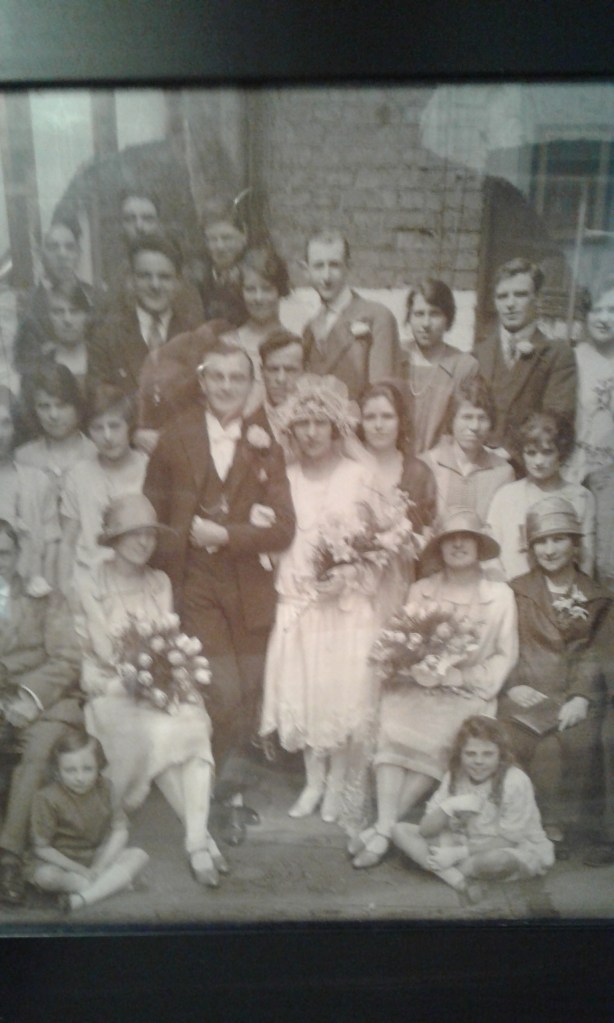
Harold was of Huguenot stock. His marriage to my grandmother, Violet Dormer, is captured in the blurred photograph.

20180924_182520

A rum looking bunch, from what can be seen. Until World War Two broke out in earnest, Eric lived with Violet at 54 Moss Street, Bethnal Green, very near Roman Road. He remembers that his Godier grandad operated a textile business at number 62, where silk garments were made up on the third floor, mainly for waistcoats. Eric attended Globe Road junior school in Bethnal Green. Like his firstborn, he then went to a grammar school, Palmiter’s, also local. When German bombs began to rain down on London, he was evacuated to Aylsham and North Walsham, in Norfolk, and then Leek, in Staffordshire. His cousins Alf and Terry took away some of the loneliness.

He returned to London, after Violet insisted that he was not being properly cared for. Moss Street had been bombed to rubble, and the new home was in Swinnerton Street, near Homerton High Street. Eric recalls bombing raids where he sat with his mum and a neighbour under a monster steel table, a protective device known as a Morrison Shelter. When he was old enough, he volunteered for the Royal Navy, training to be a morse code operator. Fortunately for me, Eric missed any war action. He sailed via the Suez Canal to Sri Lanka, then Ceylon, on HMS Wren, a modified Black Swan class sloop. Trincomalee, then a Royal Navy dockyard, was the source of much pleasure in the sunshine, as he tells it.

Back in civvy street, he went through a number of jobs in London, eventually drifting into the business of buying and selling metals. He met my mum, Phyllis Edith Gorrell, at a holiday camp in Skegness. Dad remembers calling for Phyllis on a Friday night, while they were ‘courting’, and waiting in her parents’ kitchen in Islington while she finished off the family ironing.

20180924_182800

They married in 1952, and would holiday across Europe on his motorbike, often accompanied by mum’s twin sister Stella and her husband Peter. Eventually they arrived at LLoret de Mar in 1956, where he was – to reiterate the ‘Mondeo man’ blog – obviously Good With Cock.

My first vivid memory of Eric was when he helped me to fly, at our house in Rectory Close, Hadleigh. Maybe I was three? He would lay on his back in the lounge, draw his knees back to his chest, and get me to sit on his feet. Then he would propel me up into the air and across the room. On one occasion I hit the light up near the ceiling, which made me howl with delight. Dad also helped me to ride my bike without stabilisers. Even now the thrill of moving away on two wheels remains intact. As I sped away down the close, it was clear that power, riches and women were all to be mine. Any real fear of my father had yet to manifest.

Now 90, widowed for 12 years, and alone, Eric struggles to remember anything much beyond the long-gone past, while his short-term memory is increasingly non-existent. Driving his car back from an MOT out at Bishops Stortford last year, he forgot why he was on an unfamiliar road.

But he shops, washes and cooks for himself, manages his bank account competently, calls the bingo at his bowls club on Sunday lunchtimes, and watches Sky Sports avidly. Walks slowly each morning to his newsagent to get the Times and his ciggies. I adore talking with him, and love him dearly in his frailty, because all judgement has long gone, to be replaced by a mellow haze of contentment. As long as his aches and pains are under control, he wants for little, except perhaps company.


11. Woman up

images (3)


It is humbling to discover the depths of your fears, and the bravery of your partner.

On the first night of our late August Peak District break, Maureen and I sat outside and watched the sunset from the converted barn where we were staying. One bottle of red later, my wife ran the upstairs bath, while I locked the downstairs door and drew the curtains.

As she soaked up the warmth, Maureen heard a series of desperate utterances drifting up the stairs. “Oh no, oh fuck …….fuck, fuck, fuck…..oh shit, bollocks, fuck.” And on it went until she shouted down to ask what was worrying me. I responded with more mumblings, shouts and curses, so transfixed was I by the huge hornet that had been resting on the back of the door curtain. It was around two and a half inches long, and sounding like a moped as it buzzed around the ceiling in irritation at being disturbed.

Usually we trap bees and wasps with a pint glass, slide a piece of card underneath and take the interloper back to the wild. But this monster looked too big for that, and insisted on finding the highest parts of the room, as it sought either escape or warmer air. I had read about some of the Asian hornets that immigrate illegally to Britain, and the venom of their stings, and was swiftly losing every good feeling about being on holiday. And now the bugger had found the stairwell, and was ascending.

I managed to yell a few words of explanation for my wife, telling her to shut the bathroom door. And then followed the beast cautiously, sensing that our options were limited. Maureen had already exited the bath, wrapped a towel around herself, and opened the only window in the hope that the hornet might see sense. As I wailed about how careful we had to be, she said she would blast it with hairspray! What? After an absurd split second vision of her grooming and brushing the thing, I pleaded with her not to risk irritating it.

For the next 10 minutes we watched it buzz around the high wooden beams. My fear was not just that any unsuccessful attempt to kill it would trigger retaliation, but that we would be unable to sleep with our new companion nearby. Would the fire brigade come out for this?

Cometh the hour, cometh the women. As I blathered on, Maureen grabbed a magazine, and climbed onto the bed. It had half-settled on a lower beam, just within her range at full stretch. “You know that if you miss we are fucked,” I warbled in terror.

Time slowed like a violent scene from a Tarantino film. As my wife’s arm went back, and then forward again, her towel began to fall away. The magazine smashed against the beam, and something dropped swiftly. Did it glance a nipple on the way down? The naked gladiator on the bed gloated in triumph at the still form by her toes, and finished off her opponent without waiting for my thumbs down.

I’ve asked if I can be her agent for a series of events around Britain, where she fights dangerous insects in a boxing ring, clad in skimpy spandex. Armed with superior hold hairspray and the Royal Horticultural Society monthly. Nothing doing so far, but it’s great to be married to a woman of courage.


10. Men in a rut


download


One of my standout autumn memories as an adult is a gut-wrenching decision made in October 2011, when I told two friends in Chelmsford that I’d had enough of their company.

It made me feel ill, physically and mentally, for about a month, and probably took me a year to fully get over the feelings of guilt and disloyalty. It felt like relationship incompetence, for want of a better word, until time provided wider perspective.

Steve and Tony were two very clever guys. Maybe typically male in their need for ritual. Pub, sport, speed. In fact much more complex than that, but those were the bones. All of which I can handle if there isn’t a dull regularity to the agenda, and – here’s the critical bit – an abundance of good, open conversation. A real exchange of views, with lashings of humour, a modicum of vulnerability, and a huge amount of empathy and listening. Otherwise, what the fuck is the point?

At some stage, a group nickname appeared, the Three Musketeers, which brought stirrings of unease, mixed with rising boredom at the associated banter. We were ‘lads’ again, it seemed. That hasn’t held any appeal for me since my twenties, as much as anything because marriage and fatherhood had seasoned me. Now, in the pub, especially, the loudest voice and sharpest wit started to punctuate conversation. Whenever I had something to say, it would often be interrupted, edited or simply overruled in favour of a laugh or louder point of view. Schoolyard stuff, and I didn’t enjoy school. A smouldering store of resentment began to build.

The straw that broke the camel’s back was skiing. Steve and Tony had the time and money to take weekends away. I had neither, couldn’t ski, and took pains – with some shame – to point that out. Quietly but firmly. On multiple occasions. Then they introduced a plan they had hatched. I could, they reckoned, get myself some skiing lessons somewhere up near Northampton. Fast-tracking myself into full musketeerdom. As they went through the details, I knew it was parachute time. They simply hadn’t listened. Or hadn’t taken me seriously. Or knew better. From any angle, that’s a lack of respect.

Relationships develop a momentum of their own, and this one had careered away on an unforeseen, uncomfortable track. I had ‘chucked’ other friends before, as the relationship lost its balance. Maybe there is some kind of averting action I never learned?

Don’t get me wrong though. The friendship included memorable moments. Steve took me for a ride on the back of his motorbike on the very fast road from Braintree to Stansted airport. We hit 147 mph at some stage. Everything was one thrilling, trembling, existential moment away from death or maiming. Tony took me to the Millennium Stadium in Cardiff for a 2007 World Cup game between his beloved Wales and Japan. Introduced me to cycling in the countryside, and lent me money in some precariously tight situations. I’ll always be grateful for these and other memories.

But friendship is a choice. Not an obligation. If you are my mate, you get permission to tell me anything at all, and not be judged. Unless of course you have ventured into child organ harvesting or the concentration camp business, without cutting me in on the proceeds. I promise to respect your confidences, and listen hard so that you go home expunged. And I want all of that back. Let’s keep tuning in, intimately, by sharing, listening and laughing.

I bumped into Tony a couple of years ago and we shook hands, no hard feelings. Which was one of my few ‘bucket list’ wishes. I’d love to do the same with Steve one day.

9. Mabon calling


pagan


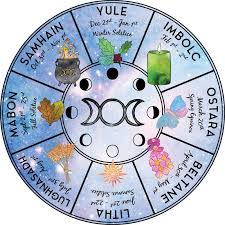
The autumn equinox, or Mabon, as the pagans call it, is rattling on our doors. In recent years, I have been among the one in every three British adults that feel the coming of Seasonal Affective Disorder (SAD). In my head, autumn has long felt like an end to the year’s best half, a time when three months of toxic Christmas adverts will suck away all my essence as the daylight outside shortens.

A depressive bout swamped me in the first week of September, driving back from delivering Rory to his university in Cheltenham on a balmy, often very sunny day. The tiredness from six hours of driving didn’t help, and my mood fell precipitously lower the next day. Black thoughts and minimum efforts for everything. Then, unexpectedly, a recovery, after a very passionate cuddle in bed that night and some 10 hours of sleep. Then up and down in equal measures until beginning this blog last Friday, after which my mood barometer has swung steadily upwards. I am tentatively exultant and hugely grateful.

All of the seasons come raw and unfiltered in the countryside. From March, when the smell of spring takes me back into the garden, there is a rising excitement, extending and amplifying through the unfolding glory of April and May, when I climb back on the bike and begin planting out vegetables. The delight peaks in June and July. Sunshine and shorts, walking and gardening. Slow, contemplative evenings, glass or book in hand, watching the birdlife. Cats stretched out on the decking, neighbours’ chat drifting across the fences. Before stars twinkle bright in skies unpolluted by light.

My brother Neil and I enjoy a ritual of summer cycling rapture several times a month, where we notch up around 40 miles of calorie-burn on mainly backroads where traffic is negligible or non-existent. The first stop is the Chequers pub at Matching Green, just short of halfway, where a pint of Noble lager hardly touches the sides. Around us happy chat. The promise of later kisses. Then off again. At times I hallucinate with joy along remote lanes where gorgeous vistas of ripe countryside almost lift me off the bike seat. An hour later, seated in the sunshine at the Fox and Goose, near Highwood, after five notable hill climbs that leave us breathless. Finally back to Great Waltham, watching the sun sink gloriously and anticipating whatever bounty my wife has cooked, before blissful sleep. When nobody is near I shout to the universe. “Thank you”.

I’m optimistic that the past downhill trend through October, November and December will be outmanoeuvred this time around. These blogs have lifted me, exactly as I had hoped. Last autumn I tried various tactics, especially the avoidance of all but a modicum of alcohol. Kept the feet warm and ingested garlic in abundance. Walked miles in the afternoons, through the rurality, wrapped layers deep, listening to podcasts. Let maximum sunlight into the house. Occasional intimacies with Maureen and long sleeps. Chats with friends. Cinema visits. Drives to the coast. Watching soccer is more hit and miss, while a roaring log fire would definitely help. Yoga is something that could be explored.

What has really become clear in my 62nd year is how the seasons mirror the human cycle. Spring, summer, autumn, and finally the old age of winter……then perhaps rebirth, if the Buddhists have it right. With sufficient funds, I would live in the Canary Islands from October to February, to stave off that symbolic annual death. Mid-Essex will do for now.

20180912_181710


8. Of mice and men

cricketers download


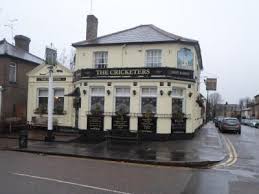
At least a decade ago, my great friend Jono and I sat in the Cricketers pub in Chelmsford, one Saturday lunchtime after he had exhausted me on a mountain bike thrash around Galleywood, Mountnessing and Ingatestone. His ears pricked up after several pints when I mentioned a long-held, totally intuitive and utterly unscientific notion that our DNA might contain memories of past lives. Jono is a canny devil, and pointed out that this might be great subject matter for the novel I had sometimes talked of writing. Getting drunk with Jono has sparked some of the wildest and greatest conversational pleasures a human could experience.

About a fortnight ago, my physiotherapist Rob told me about an academic study proving that mice trained to fear a specific smell would pass this emotion onto their offspring and future generations. Scientists applied electric shocks to mice as they exposed them to the odour of cherry blossoms. The children and grandchildren of the affected rodents demonstrated a fear of cherry blossoms the first time they smelled them. A more recent ‘epigenetic’ study of nematode worms found that memories were passed down for 7, and in some cases 14 generations. Nearer the knuckle, there appears to be evidence that the children of Holocaust survivors have increased likelihood of stress disorders.

No scientist me, unless you count many years analysing horse racing statistics with a fine toothcomb, for betting purposes. Might that have been related to my grandfather the bookmaker, who would throw his dinner at the wall after a losing day? I’m straying from the point, which is that at key points in my past I have been utterly traumatised with fear, while concurrently trusting nobody in whom those fears could be confided. And have wondered long and hard where those deeply negative emotions came from.

Two fear snapshots. The first in November 1978, still in Birmingham, just over a year after the Northern Soul debut. I pace up and down the bedroom in my lodgings in Pershore Road, Edgbaston, listening to the wind, which has been rising in strength all day. Through the tall windows I can see trees bending in the nearby park. Another dance evening is on the agenda, but how can I go in this gale? It will blow my hair in every direction, exposing my still insignificant but nonetheless growing bald patches, which are concealed with a careful centre parting of still relatively thick follicles that withstand less fierce weather. The options are twofold, both traumatising. To venture out and risk being mocked, or to stay at home, and be forced to explain my absence to my girlfriend, who knows nothing of my anxieties. I can appreciate now that other options existed, but saw only paths to potential humiliation. I stayed at home, and invented a sickness excuse.

25 years later, in May 2003, I am happily bald, but with a new and equally excruciating anxiety. I pace up and down my office in the garden, knowing that all of my emotional cut-off devices are exhausted. I can no longer hide a situation where I am forking out some £2,200 monthly in repayments on a palate of debt worth around £95,000 – or over £100,000 if you count the car loan. Not only is this sum utterly independent of our near-£120,000 mortgage, it’s also a sum that my wife knows absolutely fuck all about. With my bank manager pressing me ceaselessly to come and see him, I cannot take the pressure of keeping this to myself any more, of quietly robbing Peter to pay Paul. So I pack a bag, leave Maureen a truthful explanation, and catch a train to Devon.

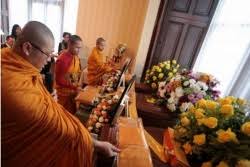
Nearly a decade on, in August 2012, a vivid dream comes to me, on the last night of my ‘deceased rites’. I have been participating in a week-long Buddhist ceremony for my ancestors. In the dream, I find myself in an old, overgrown and dilapidated square surrounded by tenement flats gone to ruin. Ornate glass panels facing the square at the foot of each flat are missing most of their square sections and rusting, with piles of sand and dirt and rubbish and weeds everywhere. Two males are chatting just within voice range, talking about having their way with a woman in my family. There seems to be no escape for her, or me.

On waking, I sense the echoes of so many past dreams, where surrounding males go bad, violent, drunk and mean. Which in turn makes me contemplate the karma of the Gorrell family, my mum’s side. The family lost a hotel at one stage, and had tentacles in Australia, almost certainly convict stock. I have four criminal convictions. The family name means something like ‘muddy place’, and originates from……..Devon, to where I returned, salmon-like, one spring. And don’t forget Lloret de Mar.

These are random thoughts about origin and legacy. Do any of us really have a clue how the world works?


buddha