236. Lineage

OUT OF ESSEX  – CHAPTER 22


“All life should involve waking from a dream.”

Buddha


Leigh-on-Sea. Two o’ clock at night. Quietly shutting his front door, the Buddha walked down the small close, towards the recently reopened railway line. He wore two Arsenal shirts, away kit over home, to rebuff the breeze. Scruffy white track suit bottoms and red trainers completed Siddharta Gautama’s attire.

An important task lay ahead, but the cake in his stomach dominated the moment. The offering from Mrs Hudson, his neighbour, was laden with cherries.

He turned left, heading east. Reconstruction still everywhere in evidence. The road changed names continually during the next mile. Cars passed sporadically. Endless ‘For Sale’ boards littered the cliff-top road.

He had not expected his sojourn in Essex, nor its dense obsessions with property, money and sex. He maintained balance by pursuing the ‘middle way’ required of all situations. He mixed freely with the workmen who were amalgamating the six dwellings comprising his spiritual centre. He listened, showing compassion and generosity.

Further ballast lay in deep meditation, the steady intake of tea and cake, and Match of the Day, a television programme each Saturday and Sunday evening. Arsenal were leading the Premiership, but Buddha knew results were transient.

As he walked, a slivered moon lit the roadside topiary, much of it still twisted from the May 12 apocalypse.

His ‘ashram’ was nearing completion. It would unveil ways to explore and control the inner world; and teach healing techniques. He had asked Micky Gaze to install equipment to play music. Buddha collated his favourites, including Awake my Soul by Mumford & Sons. Another choice was Santana’s Put Your Lights On, in which an angel told people to discard fear. The sounds looped while the men worked. Including You Can’t Always Get What You Want, by the Rolling Stones, and All We Have is Now by the Flaming Lips.

He still knew so little about England’s oldest county, whose profile had become inextricably linked to a television show named ‘The Only Way is Essex’, Mrs Hudson said. Yet almost three quarters of Essex was rural, she told him. She insisted there was more to it than girls with fake eyelashes emerging from tanning salons.

The previous morning Siddharta listened to two local decorators malign a Polish plumber grafting tirelessly in the same building. He was “stealing our jobs”, they said. Talk turned proudly to the new royal baby, and Prince Harry’s military tour of Afghanistan. The Buddha had perspective, having descended from the Shakya dynasty. Buddhism stressed the merit in good lineage.

Reaching Chalkwell Avenue, Siddharta turned downhill. The tsunami’s imprint was evident as the seafront came into view. Many homeowners had been unable to make repairs without compensation. Mounting some steps by a closed vending hut, he found a bench, with a view of the Crow Stone in the foreground of the becalmed estuary. It was time to experiment.

Yesterday, astride his Ducatti, Satan had screeched into the close hosting Buddha’s new home, and almost hammered down the door. Leathered, from chin to toe, Sal was grim with anger. “Come in and talk,” said Buddha. He sat him in the kitchen and offered sweet tea, but Satan was beyond creature comforts.

On the bench, back in the present moment, Buddha lifted his physical awareness, lessening his habitually meditative state. His five senses were ready to see if his feelings approached Satan’s. He felt his slightly aching leg muscles, dryness in his throat, and stiffness in his shoulders. Through the jogging pants, the seat was unyielding.

What he had been told was ………..but even as he re-considered the information his smile broke through.

Satan had discovered that Britain’s monarch, Queen Elizabeth II, would be asking for another increase in her budget. The news would leak out in weeks ahead. Buddha regarded this information neutrally, but the punchline had made him excuse himself, to visit the bathroom. He wet a flannel, washed his ears, used a mirror to ensure their complete cleanliness, and returned downstairs.

“Tell me that last sentence again please Sal,” he requested. Satan had begun to see the impossible humour, green eyes twinkling again. “I said she reckons she is down to her last million pounds”.

Now Siddharta roared with unbridled laughter. Eyes streaming, arse farting as his body tried to expel air through every escape valve. His shoulders heaved. His belly began to hurt. In houses set back, he heard windows opening, and an exhortation to “let us get some bleedin’ sleep”. He waved in apology, noticing several houses still boarded up. The force of the laughter made him pull his Arsenal top across his mouth.

Satan’s incandescence had eventually transformed into cold logic. “Sid, the saddest thing is that her request is likely to be accepted without fuss by an acquiescent public, sold on the notion that the queen is running short on cash, and tightening her belt just like them.”

Karma always paid out for greed, Buddha knew. If you neglected, you would be neglected.

Satan grinned. “Maybe the guys at Southchurch Park can send her a second-hand tent.” He mulled awhile. “Maybe, just maybe, she does only hold a million in cash. But how many billions, or even trillions, does she hold in assets. If you hold assets and you need money, you cash in. End of.” He was boiling up again.

Buddha reminded himself that life taught the necessary lessons, if attention was paid.

“Do you know who acts as the queen’s financial adviser?” Buddha had no reply. “It’s Evelyn Rothschild”. Buddha wanted Sal to stick to the subject. “Has anyone tried to work out the queen’s financial worth?” he asked.

Satan said the lack of clarity in the akashic files had frustrated God. In 2012 Forbes cited £18.1 billion worth of royal assets including art collections, the Crown jewels and palaces. “It would be logical to guess that her majesty has at least a few things tucked out of sight,” said Satan. “You read reports that she owns a huge chunk of Colorado, particularly around Denver, much of Delaware, several Park Avenue blocks in New York, real estate in the heart of downtown Chicago, and land all over California. What she holds in precious metals, stocks and unit trusts can hardly be imagined.”

That’s better Sal, stay rational.

“This is forgetting the Crown Estates portfolio, valued at well over £10 trillion. Crown land in Canada, for example, contains huge mineral and timber resources, but there are indications that the City of London is the real owner of the Crown Estates. That’s another story.”

Greed is divisive, and always one’s undoing. 

Buddha stood up, brushed himself, and walked. Pier remnants poked up in the distance. Satan had let off more steam. “Every major UK office of state power – the armed forces, police and judiciary – swears allegiance to the royals. Not the people. Not the parliament.”

Any system of hierarchy is equivalent to acute spiritual blindness.

As he moved, he recalled how the ‘middle way’ had revealed itself in his last and final human life, in the sixth century BC, in what is now Nepal. Siddharta had been born to immense privilege. Aged 29, he had quit his cushioned existence for abstinence and asceticism. His goal, to transcend the five senses, was not unusual. Across Asia, individuals who chose poverty to explore their inner nature were highly respected.

As if it were yesterday, Siddharta recalled his burst of clarity beneath the Bodhi tree after meditating for 49 days: that efforts pivoting upon solitude and self-deprivation were insufficient to counter the cyclical miseries of birth, ageing, sickness and death. The rest was history.

The Buddhist philosophy he developed contained doctrines of karma and rebirth flowing from Siddharta’s Hindu background, although all practitioners were encouraged to question the ‘dharma’, or law. Most importantly, the practices could take adherents beyond the suffering caused by the external world’s temporary satisfactions and pains, and the ‘scientific’ notion that you only live once.

 On strode Siddharta, passing the restaurants where Mike Burper had first seen the Big Wave. Most remained closed. The smashed casino, further along, looked like an abandoned shipwreck in light bouncing from the river. Satan’s words echoed on: “Russia kicked out its royals, so did the French. The British were actually the first to depose them, in 1649, after a long and bloody civil war. 11 years later, they were re-established, along with the Church of England, to help squash unruly radicals, like the Quakers.”

Monarchy and church are artifices. Every human is sovereign, able to tune into the highest spiritual levels.

Sal had frothed and fulminated. “Since then Britain has experienced slave trade, industrial revolution built on the lives of poor labourers, empire, world wars, lies and more lies, and now new extremes of degradation and poverty that serve to protect a ruling elite. These degenerates just happen to own the media, which fawn endlessly over the trappings of their wealth. They might look colourful, but so does petrol in a pond.”

Buddha loved the vigour with which Sal trod the troubled path of a fallen angel.

Walking now, along the very mouth of the empire, Buddha considered the word ‘evil’. While not used by Buddhist practitioners, its nearest equivalent in the lexicon was ‘unwholesome’. He thought again of Satan’s view that “many of the landed gits are inbred, psychotic lunatics who are addicted to chasing and killing small creatures using a pack of dogs”.

He remembered God saying that the Queen Mother had placed two of her nieces, Katherine Bowes-Lyon and Nerissa Bowes-Lyon, into a psychiatric hospital because they were severely handicapped. On royal instruction, Burke’s Peerage listed the sisters as dead. This was nothing compared to a 1917 cover up, as World War One raged. Fearful of patriotic sentiment, George V changed the family surname to Windsor, disguising descent from Germany’s House of Saxe-Coburg and Gotha.

By the time he stood opposite the destroyed pier, Siddharta decided to let emotion rise again. One of the decorators sat with him recently, sharing tea and lemon cake. The man normally talked about his football team, Southend United, but not this time. His daughter’s boyfriend, on an agency workbook, had prepared for a recent night shift.

“He gets a phone call saying ‘don’t bother turning up for work, there is none’. No notice,” the decorator said. “They have two young kids and a mortgage, and those calls are happening more and more.”

The decorator knew how business worked. “This is a company that made a £4.3 million profit last year. More and more of my daughter’s generation have to take work on very low pay, especially if they aren’t highly qualified. Shed loads of jobs are now temporary, part-time or so-called ‘zero hour contracts’. Is there any hope for ordinary people?”

Siddharta was encouraged by the man’s desire to perceive clearly. “I often wonder to meself if Southend will go bust after the Big Wave, so I started to read up. Detroit just went into bankruptcy, but not before Wall Street nicked half a billion in fees from rolling over the debts.”

These humans were generating hell worlds after their deaths, before they progressed to Satan’s quarters.

Siddharta inserted himself into the mind of the decorator, who was finishing off a room for a Buddhist shrine. A mind filled with dark and stressful worries: overdraft charges, inadequate pension, heating bills, his wife’s health, and his grandchildren’s education and job prospects.

Standing opposite Adventure Island, he looked at the deserted and still traumatised Golden Mile area, at the arcades, souvenir shops, night clubs and cafes eviscerated by the Big Wave.

Images came. From when the Firm had watched a documentary about Princess Diana, made by comedian Keith Allen. ‘The Unlawful Killing of Diana’ was unavailable in the UK due to legal clampdowns, but was freely available on The Place’s screens. It started by showing a letter from the Princess to her butler. “My husband is planning ‘an accident’ in my car. Brake failure & serious head injury.” Less than two years later she died, in a Paris road accident.

Amazingly, French CCTV cameras along the crash route failed to record anything. Before the medical examination was complete, the French press were stating the driver was “as drunk as a pig”. Yet the hotel bill showed he had ordered just two Ricards. “Disneyland is never far away,” was Satan’s first comment. It caught Siddharta’s eye how road sweepers were allowed by French police to clean the crash site – and accompanying evidence – within hours of the accident.

From whatever angle Siddharta viewed Britain’s royal family, its treatment of the unfortunate Diana Spencer spoke of untold darknesses. Now Buddha felt his abdomen shake. Bile tingled in his throat, heat spread through his head.

In the October 2007-April 2008 inquest, members of the royal family were prime suspects, but not one was called as a witness. God had rubbed her eyes in disbelief, and again, when Paul Condon, then Britain’s most senior policeman, admitted his refusal to hand French detectives a letter from Diana to her lawyer, explaining fears for her life. Condon was now a Knight and a Lord.

Concluding, the coroner instructed the jury to ignore eye-witness statements and forbad it to even consider the possibility of murder, Allen’s film recorded. The jury defied him, declaring an “unlawful killing”. The film’s last third underscored the monarchy’s huge cost to taxpayers, and included a clip showing Philip, aged 16, flanked by German relatives in SS and Brownshirt uniforms.

Buddha staggered to a bin. He emptied the contents of his stomach, his nose streaming acidic moisture. Innumerable lives had taught him that points were reached where ordinary conceptions of planet Earth were radically transformed. Resets, as happened with Atlantis and Lemuria, when Mother Earth shook off surface poisons.

Purged, he walked. New ideas were forming, about his work in the months ahead, and how to tackle tonight’s task. Opposite the Hope Hotel, looking through the open window of a red car, a young woman was transfixed on the battered pub. He approached, and spoke, gently. “You look a little upset. Did something happen?”

She looked him up and down. A fat Arsenal fan. Traces of puke on his white trousers.

“I could have died in there. Sometimes I wish I had,” she said. He knew to be quiet. Sally related how her married date had drowned. Her sprint along the front. Saving Chanelle’s kids. Still unemployed in a smashed-up town. “I can’t sleep, so I come here. Feels like the memories will never leave. My money continues to go, though. This car will have to be sold soon.”

You will build your own sacred path, of kindness and warmth. And show others how to hold to beauty at all times.

“Have you seen that movie, Elysium?” she asked. “Is that what’s in store, a nice paradise area hanging in space for the mega-rich, and a ghetto down here for the rest of us, with bloody drones and robots keeping us in check? Or the Hunger Games, where the rich watch the poor kill each other for sport?”

The meek always inherit the earth because Forces of Light head naturally to softness.

Siddharta pulled her from the blackness. “It is an impertinent request, but could you give me a lift. I have walked from Leigh, my legs are tired, and I must reach Southchurch Park.” He spoke oddly, but she trusted him. “Why are you going there in the middle of the night? Do you know people there?”

Her interest was pricked. “There were reports about that “community” in most of the national dailies, claiming people there have criminal records, addictions and mental health problems. How do they live without money? I could do with that knowledge.”

He answered her, clearly and truthfully, during the short drive. He told of Gandhi’s presence. She parked up in Kensington Road. Offered him a lift back, and waited.

Burper was manning the southern gate. “Allright Sid,” he greeted. Mike liked it that Siddharta hadn’t crowed after Arsenal’s 1-0 win over the Spurs.

Buddha walked to the bridge at Little Venice, crossed the small lake, and approached the still figure of Gandhi out on the field. They embraced. “Lord Buddha, it is so very good to see you,” smiled Gandhi. “And you Mahatma,” bowed Buddha. They exchanged small talk about their individual projects. Then Buddha explained the course of action ahead, asking to be left alone.

“As you wish. I will be in the textile centre, preparing for the day.” Gandhi retreated into the dark. Buddha cast his gaze at tents and caravans corralling the playing field. This had finally been completely dug over after the removal of its top layer. He walked to an approximate centre, envisaged the ground as a unity, and cast inside for pure awareness.

He chanted softly. “Ong ah hong, ong moni beni hong”. Gently, via a rocking motion, he envisaged a blue spherical object encompassing the unity. He squeezed the sphere with his mind. Back and forth the blue ball swayed, grey wafts of smoke exiting its edges, carrying away salinity. Buddha let the images clear, opened his eyes. He slowly walked back to the gate, dipping his trainers in the lake so Sally’s car floor would not muddy.

“All done Sid? See you soon then.”

“I do hope so Mike.”

Sally was bursting with more questions as they drove away. “I’ll suspend my complete disbelief about Gandhi living in there if you tell me what he’s doing. Is a new civil disobedience movement kicking off on my doorstep?”

Buddha said he could not predict. That Gandhi was overseeing the production of clothing, and the community aimed to grow all of its own food. “I can also say that if we assert our values, we become the change we want. You can do this yourself Sally. Be sovereign. Tomorrow’s benevolence is the fruit.”

Knowing the route by heart, she pondered on one of her psychology modules at university, which had examined benefits from community gardens in Manchester. “The art of agriculture is the first lever of wealth in any person or nation,” she said, remembering a quote. “Have you ever seen an allotment in full bloom?” she asked her new companion. “Flowers juxtaposed with cauliflowers and runner beans, with multi-coloured paths running in and out of structures made from old doors and corrugated iron.”

He told her of the Austrian, Rudolf Steiner, who founded a spiritual movement, anthroposophy in the early 20th century. “You would enjoy his fusion of science and mysticism.” Sally nodded. Her cousin had attended a Steiner school, before building an architect practice.

In 15 minutes they were back at the close, where he asked Sally if she meditated. “You have expressed yourself very passionately tonight. It would help you to know that the highest and most comprehensive teaching of the Buddha was the Lotus Sutra.”

“Oh my days, you know some stuff. I’ve heard of the Karma Sutra. What does the Lotus Sutra teach?”

“The existence of an innate and universal truth known as the Buddha nature, the manifestation of which brings absolute happiness and boundless compassion.”

“I could so do with some of that. How do I start?”

“Repeatedly chant the very simple phrase Nam Myoho Rengi Kyo. The sound and vibration will tap into your full potential as a human being, which leads, eventually, to Buddhahood.”

“Sounds awesome. So are you a Buddhist?”

“Yes, devoted for many years Sally. Please chant those four words. Aloud or inside your mind. You will enjoy the outcomes.”

“Can I see you again,” she blurted out. “Obviously not like that,” she added. “Well, no, not obviously! No offence meant.” She was becoming flustered. “Oh I’m sure you’re wise enough to know what I’m saying.”

“Yes, I would be honoured. Just visit when you wish, or call me on this number.” He handed her a card from the pile printed by Micky Gaze.

She read the name. Siddharta Gautama. “Can I call you Sid?”


235. Joe Pesci and me


index


I would never willingly offend. So, if you have reservations about profanity, go no further.


My old Norwich mate Jonny Price used to reckon this story was “the best thing you have ever done Kev”. That’s hardly likely, but when I met his mates three decades ago, they all knew the story. It was gratifying that they found it so funny.

While working as a milkman, back in the late 1980s, I served a customer who lived on the Westlands council estate, in western Chelmsford. I served about 350 of them, but this one stood out. He was a jack-the-lad, roll-of-the-shoulders geezer, who loved nothing better than banter. Can’t remember his name anymore, or any other details, except that he was about my age (30-ish), and had a touch of wit and confidence that made conversations fun.

I would knock on the door of his maisonette for the milk money, every Friday evening. We developed a singular repartee, where, at some stage of the conversation, one of us would say. “What are you?” But actually sounding something like “whoraya”. That last bit is important.

And the other would reply: “Cunt”.

Being Essex, the reply would have been much more like “caaaaant”, stretched out in the estuary delivery mode. That delivery was essential, the lynchpin of the humour and play-acting. Southern Essex man pulls back his lips and lets out that sound with a mighty disdain, apeing the contempt with which his Cockney peers wield this missile of a word.

It made us chuckle, grin and bond. Cathartic and poetic.

Down at the dairy, the word would bounce around liberally as the lads loaded their floats in the mornings. It was a bog-standard form of friendly verbal sparring for blokes around our way, however odd, rude, disrespectful or non-PC it might sound (or not) in the ever more polite and offendable climes of 2019. The foreman, Bernie, would often be on the end of the banter. He would unreservedly insist that “a cunt is a useful thing”.

Anyway, back to Westlands. I think this guy had been out for a few Friday evenings in a row, building up arrears for his red tops (homogenised milk). I knocked, and was about to go away, thinking he was out on the razzle again, when I heard him come down the stairs. He opened the door, with a towel around his lower torso.

“Whoaa, allright mate,” he said. He was swaying a bit. Alcohol had clearly been imbibed. “I got a bird upstairs, but I better pay you. I’ll nip back up, write you out a cheque.”

“Cheers.”

Reascending, he asked what he owed me. Really slurring the words. “Whorrriyowya?” So very similar to the joyful trigger of “whoraya”.

Eager for jousting, all I heard was the ritual question. “What are you?” (coming and trying to take my money when I’m getting my leg over).

Clearly, there was but one reply.

“Caaaant!”, I batted back.

He was halfway back up the stairs. He stopped, turned and frowned. “You what mate?”

I took a deep breath, leaned back, and really let him have it this time. “Caaaaaaaaaaaaannnnnt.”

He was really puzzled now. “What?” he hissed. I was more convinced than ever that he was prolonging our weekly exchange.

Letting my diaphragm use itself deeply, I repeated it joyfully, with utter glee. It took all my breath away. “Caaaaaaaaaaaaaaaaaaaaaaaaaaaannnt”.

“What’s going on pal?” he said. “I’m asking you what I owe and you’re calling me a cunt!” I saw violence brewing in his eyes. My light bulb finally came on.

Parallels perhaps with the Goodfellas scene, where Joe Pesci menacingly asks: “Funny? How am I funny?” That excruciating, liminal space where perceived insult can beget belly-laugh or brawl.

Somehow, I explained the misunderstanding. Luckily, he was truly preoccupied with matters of the groin. Maybe the drink, or the awaiting pleasures, had erased our rite from his memory. It may have been fortunate that he was one swift move away from a falling towel.

Most importantly, I got his milk money.

The shame was that he moved a week or two after, and I never got the chance to make a proper apology for being such a caaaaaaaaaaaaaaaaaaaaaaant.

Never saw him again. I hope his life rolled smoothly. He will never know the pleasure that he gave Jonny and his Norfolk mates. The story has an unexpected ending.

I e-mailed Jonny yesterday, who said this: “It’s one of our many catch phrases on birding trips. Often in the rain forest you’d hear someone mutter…cuuuuunnt.”

Love it.


234. Multi-tasking


Watching television, for me, is all about tunnel vision. Laser focus, completely drawn in. Paying undivided attention. Trying to ignore my phone for an hour or two.

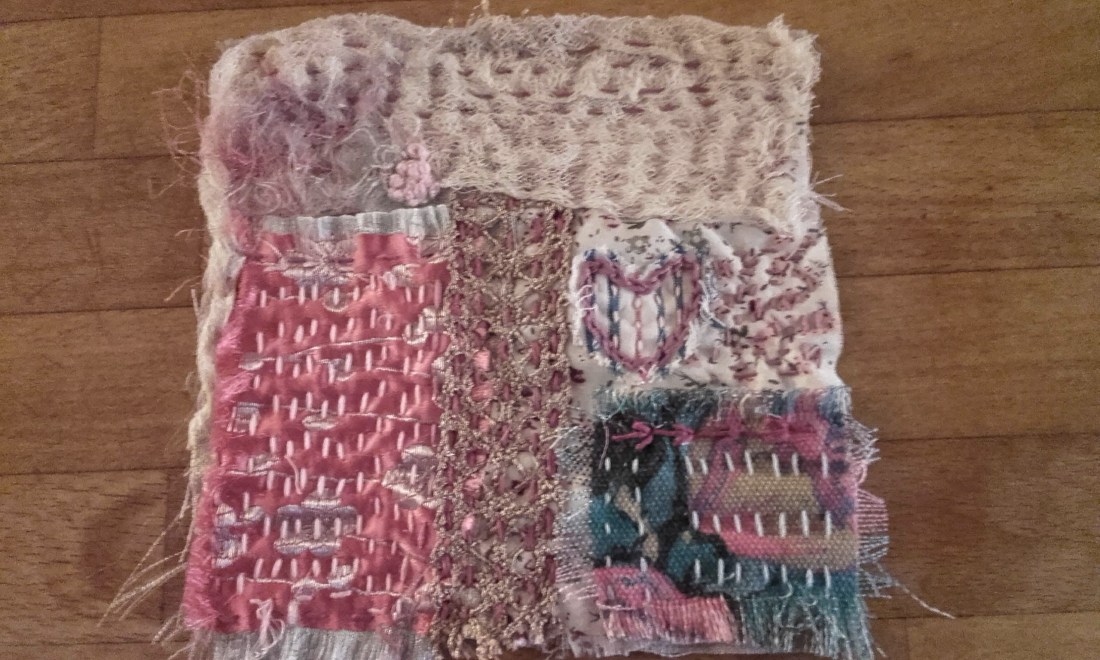
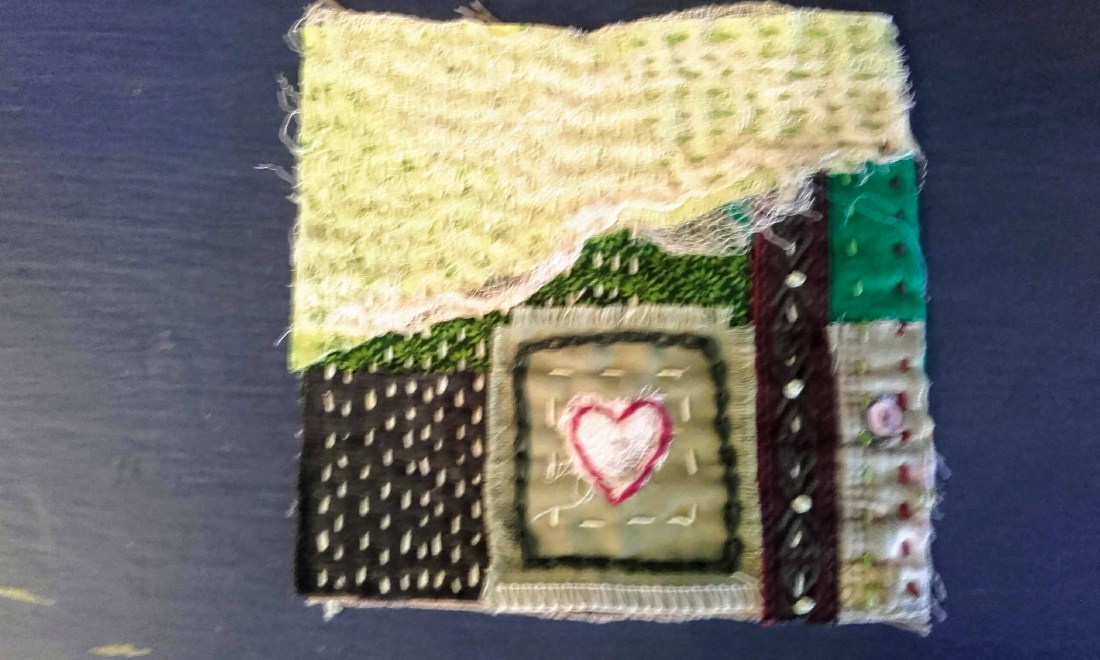
Maureen has the gift of being able to simultaneously work with her hands and follow the narratives. In such mode, she has created these items over the past week or two.


20191114_121104

20191114_111718

20191114_111703

20191114_111645

20191114_111625

20191114_111604

I am beguiled by the craft and artistry, in what has been labelled as slow stitch meditation. The contrasts in colour and texture, the imagination to dream so precisely in such a small space. She also manages to look at her phone, illustrating her multi-pronged mastery.


233. Cash and curry

OUT OF ESSEX – CHAPTER 21


“Someone once said that it is easier to imagine the end of the world than to imagine the end of capitalism. We can now revise that and witness the attempt to imagine capitalism by way of imagining the end of the world.”
Fredric Jameson


It was Saturday night at The Place.

Chicken tikka masala had been ordered up from Hell’s Kitchen. God was washing it down with a bottle of 1980 Margaret River Chardonnay, that Satan had lifted from an off-licence in Belgravia. Beside her sat Maggie, cleansing her palate with raspberry sorbet.

God regularly invited Maggie to the inner sanctum. They watched Essex on the screens, and talked. With over half of her team missing, God was grateful for company.

Frustrated by her inactivity, Maggie had been learning aikido and karate. It provided catharsis for unresolved angers. But the real craving of Britain’s first female leader, now deceased, was for wisdom. To understand her soul’s journeying nature, and the purpose of incarnation.

God tended to lead conversations. “Free will is complex Maggie,” said God. “Mine and everybody’s. Complex. Things don’t turn out as envisaged. You hatch a plan – then watch it take on life of its own.”

Maggie kept quiet. The sorbet was good. But this was priceless.

“I’ve said it before, and I’ll say it again. The last thing humans ever needed was money,” moaned God. “Life is hard enough – for Christ’s sake, I made it that way. The trauma of birth into a meat sack; the parenting lottery; the indoctrination of most education. Friends and foes. Egos and shames. Laughter, love and tears. The mating game, and its genetic underpinnings. Hunger, disease and mortality.”

Maggie recalled three-dimensional life: “Yes, the pressures could be quite overwhelming. Bringing up little ones. Work and careers. Defeating trade unions. Boosting arms sales. ”

Wincing, God cut in. “It was a test, a brilliant, unparalleled poetic test, of me, the Creator, and you, my tiny shards, the souls experiencing life on Earth.”

God took a deep breath. “The only things you had to do, all along, were to tend the earth, populate the land and report back. Nothing more. Forget the nonsense about worship. Just communicate. Talk to me in prayer.” Maggie remembered her prayers, last thing at night.

God elaborated. “Or sing about how the dice rolled, and the rains fell. Write a diary, to make me giddy with happiness. Pen poems and perform plays. Mourn your dead. Muddle through your infirmities. Tell jokes. Shout out your orgasms. Cuddle then lament your addictions. Shine out your lights. Trumpet your pain and pleasure. Holler your hallucinations. Strum out the best and the worst. Talk to me. So that I could know the depth and breadth of my experiment. And maybe tweak it here and there”

God poured another glass, asking if Maggie would join her. “No? Well it’s good that your soul stays in shape. Where was I? Yes, the ever-elusive plan. You know I did figure that the strongest wills would prevail. But had no idea that some dark agent would invent money. The concept is not mine. It is, for want of a better word, alien. Shocking. A black swan.”

God asked: “Did you know that there are ten trillionaires on Earth? You met two of them in your last life. They have all deleted public records of their existence. Yet possess the power of ancient emperors.”

Maggie felt lucidity fly near, like an almost-understood dream.

“Money, money, money,” said God, “A curse and a pox that says we are here to compete, weaving a spell that some lives are more valuable than others. Taxes and loans. Bailiffs and bankers. Shoring up the notions of privilege and the under-privileged. Starvation amid opulence. Survival of the fittest.”

God burped. “Sorry. That smells revolting. Anyway, one especially upsetting result of money that infests my screens is the profligate consumer society. Have you ever looked at the zombies wandering shopping malls, fast asleep, paying their tithes?” There was deep sadness in her voice. “My Creation affects me. Whenever humans crash, I crash. When Satan fell, I fell. But that’s another story. He’s a loyal lieutenant now.”

Finally, Maggie spoke. “This is no more than an idea. How about if your plan has cunningly, stealthily survived, morphing and adapting?”

God experienced a surge. Her eyes focused. “Pray, do tell.”

“Well, thinking about those hierarchies, the trillionaires down to the have-nots.” Maggie struggled for simple words to bridge a huge complexity. “Did you build, no… did you insert into free will the possibility that humanity would need to get itself in a such a pickle, face such a make or break challenge, so that it could either discover its deepest, most spiritual nature, and break the invisible chains, or fail and die?”

She picked words carefully. “So that life could now be poised at a penultimate stage….. as a kind of medicinal poison for all souls.”

“Wouldn’t that be a thing Maggie? Humanity digging itself out of the shite and finally singing from the same hymn-sheet. As I said, plans change in ways that cannot be predicted.”

God felt better about Maggie. “Now, as regards your role here. Had the insurance market collapse proceeded as planned, you would now be cheer-leading a radical Essex putsch to abolish money. But circumstances continually change. I am fully aware of your limbo, while Buddha and Gandhi build the Southend experiment. Be patient. Your chance will come. Before it does, we need to talk about money Maggie. Properly. Another time.”

“But just look at this.” God pointed to the glow surrounding a house in Southend, fighting back the darkness. As Dawn Landais and her family slept, God switched the screen to Chelmsford, where similar luminosity wrapped the house where Rose and Edward Fawkes lay dreaming.

232. The Queen of Southend

OUT OF ESSEX – CHAPTER 20


“Journalism is not a profession or a trade. It is a cheap catch-all for fuckoffs and misfits—a false doorway to the backside of life, a filthy piss-ridden little hole nailed off by the building inspector, but just deep enough for a wino to curl up from the sidewalk and masturbate like a chimp in a zoo-cage.”
Hunter S. Thompson


Dawn was crammed with melancholy.

She stowed her gear in the pub, crossed back over the A127 and peeled open a McVitie’s Gold biscuit bar to sweeten the walk home. The sun on her bare arms felt poised between mellow and spent. Tomorrow was the first of September.

Her takings were going down. £44 today, £49 yesterday. Just numbers, she told herself. She heard a voice in her head suggest she might be too familiar with her customers, breeding contempt. Another voice said weekend work might bridge the growing gap.

Looking up at the nearly full moon, she eked out the Gold bar. Why didn’t Steve worry like she did? His new job, in one of the reconstructed seafront cafes, paid less than IKEA had. Explaining that to the debt management company hadn’t been easy. He was so much happier, which she loved. But at this rate, there would be no cash for Christmas. She might have to borrow from her mum.

Steve greeted her with a huge hug. He had cooked jacket potatoes for tea, with a lentil sauce. For a man holding over 100k in debt, he was so bloody relaxed. At the table, Nigel was rabbiting on about a lad at school who reckoned the world had ended on the last day of 2012, as prophesied by the Mayan calendar.

Genevieve was smiling at his story, a rare event. She looked like the self-declared Queen of Southend, in her black skinny jeans and DMs, lurid red blazer to match her lipstick, sleeves rolled up. Jet black hair worn in an asymmetrical blunt bob. Three earrings on the left.

Dawn saw her daughter was reading a comic. She nudged her. “Oi genius, what’s that?” Genevieve flipped up the front page. ‘The Invisibles’, by Grant Morrison. Then head back down, sharp eyes missing nothing.

After tea, Dawn washed up, standing at the sink. Wondering if she should take on more part-time work. Or return to the call centre. In the adjoining room, Steve watched the news while the kids web-surfed.

Dawn’s reverie was shattered by the sound of plastic hitting glass. And Genevieve shouting.

“YOU LYING CUNTS. YOU FUCKING LYING BASTARDS!”

“What’s going on?” said Dawn, hurrying in. The remote control was in pieces on the floor. Steve looked scared.

“It’s the fucking BBC. The bastards have made up a report about Southchurch Park. They’ve invented it. Lie after lie.” Genevieve was spitting blood.

“What on earth?…….Why would the BBC lie? It’s a proper news channel.”

“Don’t make me laugh mum. It’s the channel that banged on about Iraq’s Weapons of Mass Destruction. The organisation where the journalists knew about Jimmy Savile but did nothing.”

Dawn frowned. “OK, but how could you know? About this? Anyone can sit and accuse people of lying. Where’s your evidence?”

“I was there yesterday.”

“You missed school? Genevieve! Don’t you want your ‘A’ levels.”

“Mum, that’s like asking me if I want to be famous. I couldn’t care less. What matters is that the guys there voted not to let in news crews. They reckoned they’d get stitched up.”


***


Dawn made them all a hot drink. Nige reassembled the remote and Genevieve hit the playback switch. “Watch,” she commanded.

“Now we bring you a special report”, said the news anchor, “from Southend-on-Sea, in Essex, where an unusual social community has come together in the wake of the May 12 tsunami. There may be some disturbing images.”

A young female reporter stood outside the park, looking earnest. She told viewers of the rising use of illegal drugs in the new community. The first images were of multiple syringes strewn near dustbins.

Genevieve hit pause. “Right that’s rubbish, straight away. They vote on everything.”

“What’s that got to do with it?” said Steve.

“Alex – nice guy who runs the park security – was telling me that one of the first things they voted in was no drugs. Not because they’re prudes. They simply don’t want the Old Bill having any reason to raid the place. Plenty of weed users there, and others who enjoy mushrooms, but they always go outside, well away. Down by the sea wall at night is a favourite. Anyone caught buying, using or even stashing in the park is kicked out, within minutes. You’re looking at a picture from somewhere else.”

“How can you be so sure?” asked Steve.

“Because the building behind the dustbins you see – look, right there – is bright royal blue. There’s nothing in Southchurch Park that colour. I clocked the whole place. You know how good I am at that. I walked around the park with the bloke who organises most things, Dave Dawson. He was sweet – to be honest, they all are.”

Steve and Dawn knew to keep quiet. Their daughter’s intelligence was like a stream of molten lava, burning through all it touched.

The report continued with an interview. A middle-aged woman with dreadlocks was telling the camera that she had left the community after she suspected a plan to rape her, and then became uneasy that it was a hub for people trafficking. “A lot of kids were there one day, gone the next. Same with adults, particularly Asians. That wasn’t normal. It is a frightening place. People should stay away.”

Genevieve was calculating. “I can’t prove she wasn’t there, but I can find out. If she was, chances are she’s been bunged a big wedge to say that. One of the things Dave mentioned was how few people do leave. That it’s a remarkably calm and stable community, that is gradually growing.”

She shook her head. “This is the killer though.” She hit ‘play’ again.

A picture clearly shot through railings showed a child being chased into a minibus full of other children. A middle-aged man and a woman, both wearing shades, locked the doors, and hurried around to the front seats. The vehicle pulled out of the park’s southern entrance. The reporter referred to a “suspected incidence of child trafficking, captured live”.

“That’s definitely Southchurch Park,” said Steve.

Genevieve nodded. “Yeah, I stood and watched this ‘incident’ happen yesterday morning, from a different angle. The guy is Dan Fawkes, the journalist.”

“The cool bloke who filmed the tsunami,” said Nige. “Kept his bottle when the Big Wave came up the Leigh hill.”

“The woman is his wife, Mary,” said Genevieve. Triumph arcing across her face.

“So, I was having a coffee with them just before they left. Their kids are about the same age as me and Nige. Dan and Mary love what they are doing. They would have spent all day telling me about it. But they had promised to take a bunch of the park’s kids over to Marsh Farm, in South Woodham Ferrers. I actually made them late. And I watched them leave.”

Dawn was stunned. Genevieve had talked about the “sleight of hand” at the BBC and other media before, but she had paid no attention. She ventured a thought of her own. “Apart from anything else, the reporter ignores the real story. That these people are trying to get by without money. It sounds impossible. I want more details.”

The report concluded with the news that “financial experts have told the BBC that Southchurch Park is very likely a money laundering operation, with untraceable offshore accounts.” Straightening slightly, looking more serious, the female added: “One source close to MI6 has told us that Russian involvement is a distinct possibility.”

Genevieve sighed. “Is that what you want me to go to school for? To play my full part in this poxy adult charade. To be a businesswoman, accountant, lawyer, banker, or, God help me, a journalist. To be a liar and a pretender.”

She loved her mum and dad because they did, mostly, listen to her. “I’m sorry about my outburst. But here’s what I honestly think.”

“Can’t remember the last time you were honest,” teased Dawn.

“Very funny. I’m thinking about leaving school and living down at Southchurch when I turn 18, in November. Please….let me finish.”

Genevieve tapped her fingers in concentration. “I’m no expert. The BBC won’t be calling me for quotes. I’d tell them to fuck off if they did. But it’s as clear as day to me that the only reason our economy – all of the Western world – hasn’t collapsed is that all the central banks keep printing money. Keeping things afloat, while most people’s debt swells and their savings run down.”

She continued: “That finishes only two ways. One: a monster financial collapse, making 2008 look like a tea party, if the eco-systems don’t collapse first. If any of that happens, the guys at Southchurch will at least be self-sufficient. Or two: a rewriting of reality.”

“What does that mean?” said Dawn.

“It means tearing up the script, now, not conforming, making this life count so much that the old ways fade. Here’s the fantastic bit, where Southchurch comes in again”

“I can hardly bear the suspense,” said Steve.

“I don’t know how they’ve done it, but Gandhi is there, at the park. Gandhi. The Indian legend. I talked to him yesterday. He’s no spring chicken, and slight, but it’s him. I’ve looked at tons of old pictures. He’s reincarnated somehow, come to Southend.”

Dawn let out a puff of exasperation. “That’s not good enough, darling. Sounds like your perception, not a real fact.”

“Suit yourself – it gets weirder,” said her daughter. “The Buddha is here as well. In Old Leigh. They’re building him an ‘ashram’, Mary said.”

Steve raised his eyebrows. “Yeah, that’s it dad, keep your ostrich head wedged in the Racing Post. I’m telling you both, it’s like the fabric of space and time has been breached. It’s like we’re in a David Lynch movie.”

Her eyes flashed. “So, if you think I want to waste time at school, at this un-fucking-precedented moment in history, think again,” insisted the Queen of Southend.

“And here’s the kicker. If both of you joined me, you could stop worrying about money.”

231. Out of the blues, into the quantum


index


I try not to bang on about meditation too much. It’s a personal thing that others will not necessarily find interesting. But boy, did it work a couple of days ago!

I very recently decided to stop the legal transcription training work I’ve been pursuing, to try and top up my journalism income. In brief, it pays £35 per transcribed hour. And it was taking me over two hours to transcribe six minutes. £1.75 an hour.

Of course, speeds improve with practice, but not by enough to make it worthwhile or to begin to fill the money gap in our lives. And it was making me unhappy, doing the training and waiting for the next job, knowing that it wasn’t going to make the difference I had hoped.

So I stopped the misery; said ‘that’s enough’. Huge sigh of relief, initially, followed by the inevitable self-questioning.

Thursday morning was sunny and crisp, so M and I tidied the back garden. Great to be outside, but melancholy had me firmly in its grip. Couldn’t get a happy thought that would last. Could hardly talk.

It was time to seriously move the body. When the mood is low, I automatically head north along the Essex Way towards Little Leighs church. I mentioned it in Blog 195.

The countryside looked implacable in the low afternoon sun.

way there


But sometimes nothing can stop the flow of negativity. It takes just under an hour to get to Little Leighs. Couldn’t shift the mood. Until the first sight of the church. Somehow, it always comforts.


approach

I’m not religious, unless you count a few Buddhist leanings acquired back in 2012-13. It’s the peace and quiet of the place.

approach2

There cannot be more than 12 people living in the vicinity. For some reason I also like how the boundaries between church and fields merge and melt into each other.

church and fields

As for the graves, they don’t bother me one way or the other.

graves1

Here’s the bench I sit on.


It was starting to get colder: I pulled a woollen hat over my head; zipped up my coat. And then closed my eyes and dived in, letting the thoughts come and go. Silently chanting the mantra when I could remember to. Wildlife teems all over the place. A couple of times I was disturbed by the patter of squirrels’ feet, and a bird which was flying around the graveyard trees.


approach 3

And then I was gone, spiralling, unawares, somewhere down towards the floor of my mind. Occasionally half-remembering the mantra. Gone from the body that sat in a churchyard. Into somewhere that goes by no name. Maybe a part of my unconscious. So comfortable. The quantum field? The collective consciousness? Did I dream? Or sleep? No idea. And then slowly coming back, maybe 25 minutes later, retaining many of the benefits from the comfortable place. Calmness. Satisfaction. Contentment. Clarity. Physical warmth. Fingers tingling with energy. Physically and mentally refreshed. And the stunning sight of the very low November sunshine still bouncing back from nature’s russet and golden bounty. Yep. That good.

And a different Kev Godier walked home. Absolutely adoring the scenery, carrying no worries, as the evening encroached. Saying ‘thank you’ more than once. Thanking the universe, the ether, the subconscious, the technique, myself, God, Allah and any other form of possible provenance.

moon

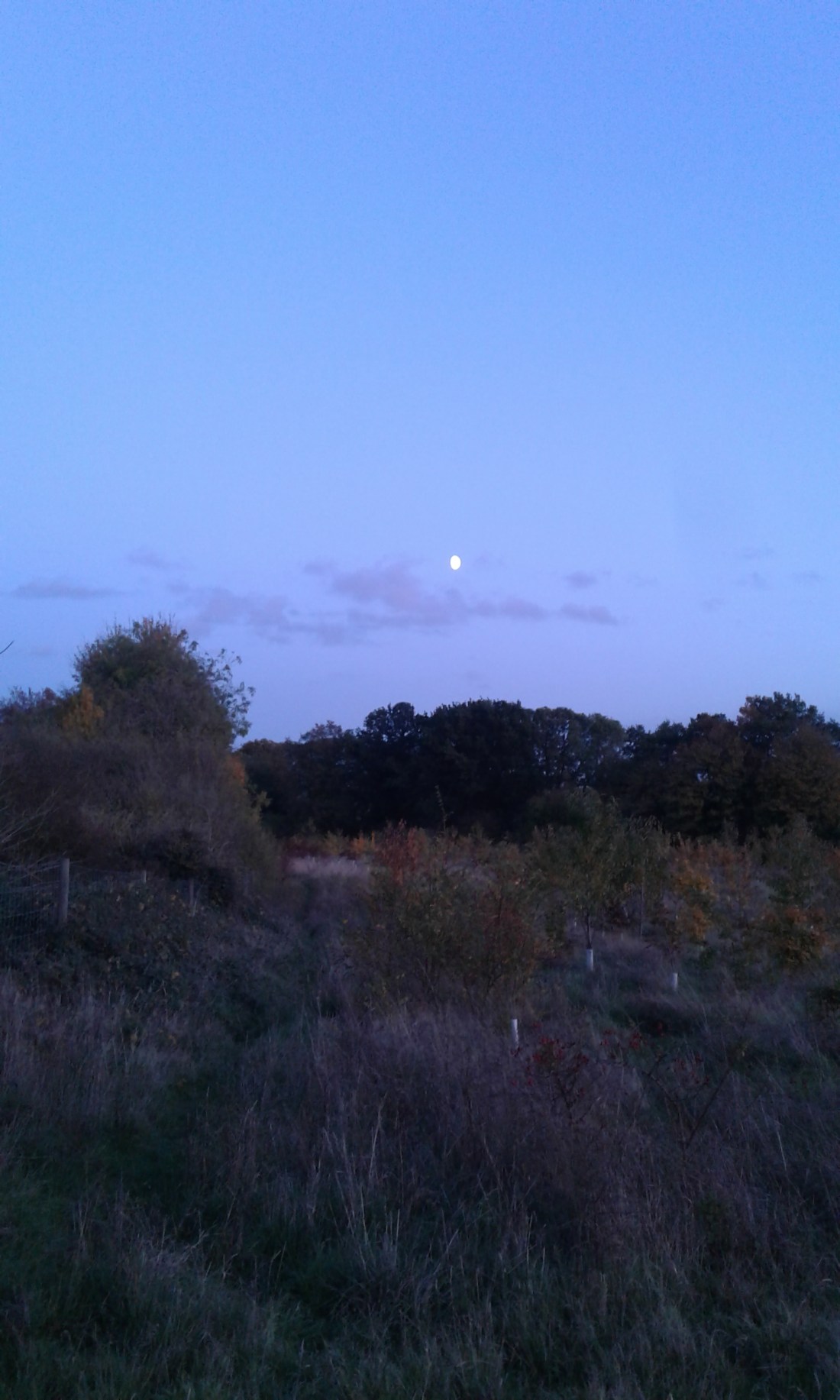
Feeling serene. Despite the waxing moon. Anticipating, with gratitude, another delicious dinner prepared by my wife. And reminded of the electrical power underpinning our society, epitomised by the blazing floodlights from Chelmsford racetrack, a few miles away.

racetrack

Why do we worry about the future? The present can be overpoweringly incredible, whatever the circumstances. Which can help in facing uncertainty. Still not sure if I would want constant serenity, as the Buddha apparently discovered, or whether the contrasts between high and low are equally good ways to experience a life.

It’s good to have a tool that can turn around the blues. So glad I did the transcendental meditation course. And that we moved into a rural location five years back.


230. Men with no surnames

OUT OF ESSEX – CHAPTER 19


Eric: You scheduled the conference call Vito. Is there a problem?

Vito: This thing, Eric, this pimple in Essex. Southend’s “camp with no money”. Huffington Post reported it yesterday. Should I worry?

Eric: No. It’s a storm in a teacup, Vito. Free-riders and fools kidding themselves. Going nowhere.

Frank: Are they nuts? Or dangerous?

Eric: They are a bubble, Frank, that poses no threat.

Frank: Tell me in plain American: are they finally waking up?

Eric: It seems a number of them do understand how our narratives and tactics drain and mislead humans. Some see right through the 9-5 grind and endless consumption. The dividing and ruling.

Lev: Not so good then Eric. What intelligence gathering is in place?

Eric: Cameras on every streetlight around the park. Sound bugs in and around the main building.

Ignacio: Do we have assets inside the park?

George: Two infiltrators. Supposedly homeless.

Ignacio: Good. Our cartels always infiltrate.

Zhiqiang: Eric, this could never happen in China. Our society is older. It understands how humans discover their deeper natures under pressure, in crucibles. So, no wild chemistry labs here. Just the one experiment, endlessly repeated, with a burner so standard as to be invisible.

George: I share Eric’s confidence, Zhiqiang. There is no outreach. No spark lighting wider fires. In a year, probably less, the bubble will pop. A group of dropouts, who failed.

Charles: In Hong Kong we look closely at the people. Who is leading? What are the finances?

Eric: Nobodies. Visually, a tall individual stands out. Known as Sal. He commands respect but drinks to excess. No data on him, oddly. Equally strangely, somebody who bears a remarkable resemblance to Mahatma Gandhi.

Mukesh: That fucking bastard? India still groans under his nonsense that hierarchies are false, or that we develop spiritual qualities to take into other lifetimes. Could it be a relative?

Eric: Again, no data to be found. Which does niggle.

Charles: And finances?

Eric: Mainly from a lottery win. Michael Gaze, a former fireman who prefers to live at home. Hardly surprising. Supplemented by a small-time journalist, Daniel Fawkes, who videoed the tsunami.

Vito: Good Catholic surname. But still something odd about this seaside town. How many humans in the park?

Eric: Two hundred or so.

Lev: Eric, George, you need the BBC to work the public. Let them know of the terrible drug abuse afoot, the park’s rapes, its child labour.

Frank: Get the dailies on it. Highlight the people trafficking, money laundering, offshore banking. The world needs to know.

Shimon: I love it. Insisting that these vacant hippies share our business models.

George: Consider it done. Winter will finish them off anyway. Any other business?

Shimon: An update on Britain’s payday loan business would be of interest. Our banks are looking at the gap in Africa.

Mukesh: Our banks also.

Eric: It’s all good Shimon. With potential for better. Our big banks have invested heavily in about two dozen new companies coming in since 2008. Turnover still smallish, approaching a billion pounds.

Mukesh: Let’s divvy it up Shimon. No more arguments.

Lev: I’m interested now. How deeply can the sheep be fleeced?

Eric: Wonga.com is charging interest rates of 4,000 per cent APR or more. When the Archbishop of Canterbury kicks up a fuss, you know things are working. You will all love this one: an £80 loan from a company called Capital Finance One carried charges of over 16 million percent without swift repayment.

Frank: Beautiful. Poetic. You can never charge the degenerates enough. I feel a tear coming.

Lev: I love your love of the details Eric. Any chance of Cameron stopping the fun?

George: He is a good administrator, who toes the line. And we have Chancellor Osborne legally challenging the EU cap on bankers’ bonuses.

Mukesh: Business as usual then, gentlemen. And what about Assad?

Eric: The world is about to be presented with some very compelling evidence of a chemical weapons attack near Damascus. On his own people. How very foolish of him.

229. Southchurch Park


index


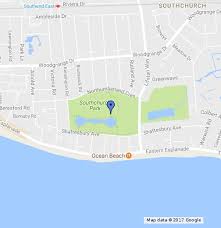
Last week Maureen and I drove down to Southend, to pay a visit to Southchurch Park. I wanted to see if anything had changed, or there were details I had overlooked when writing ‘Out of Essex’.

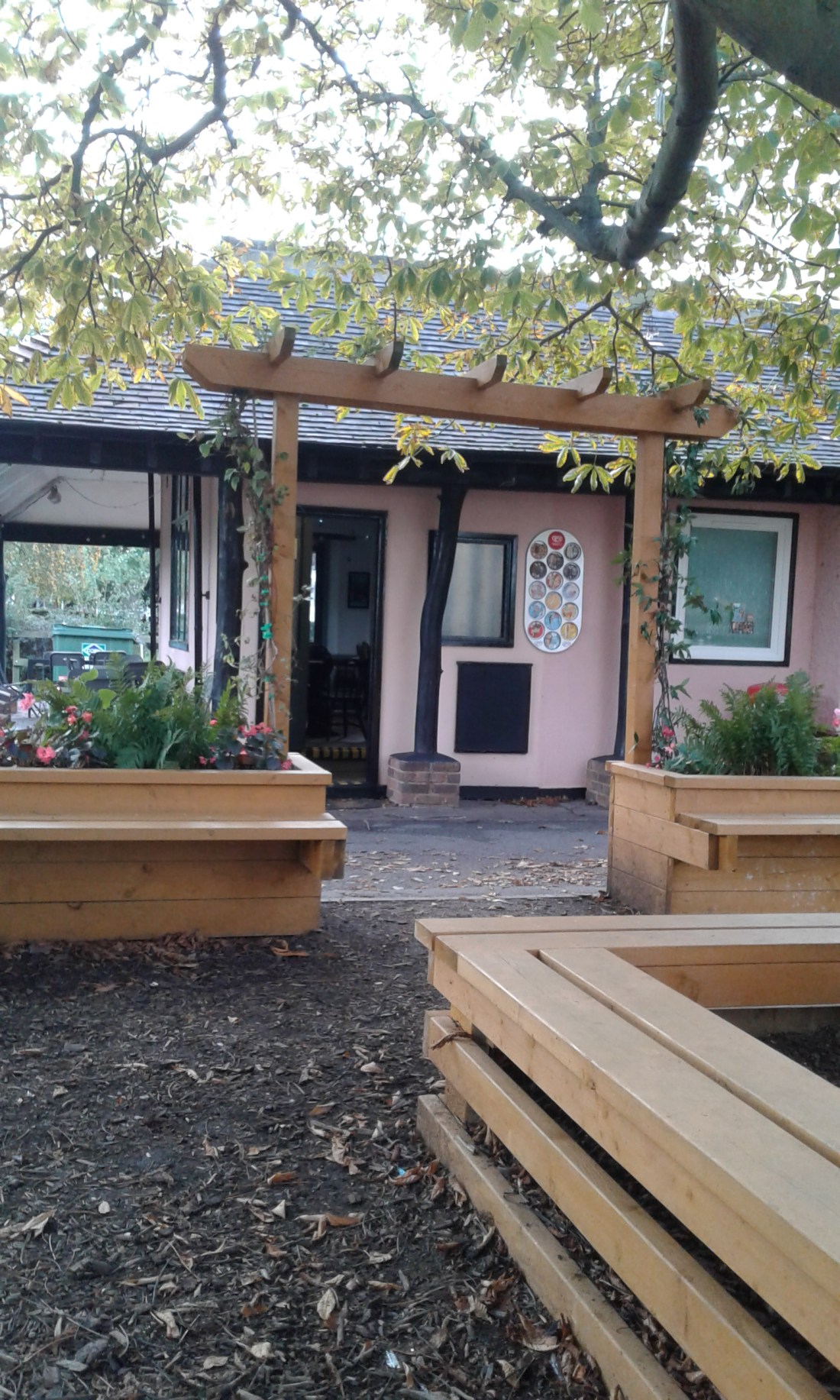
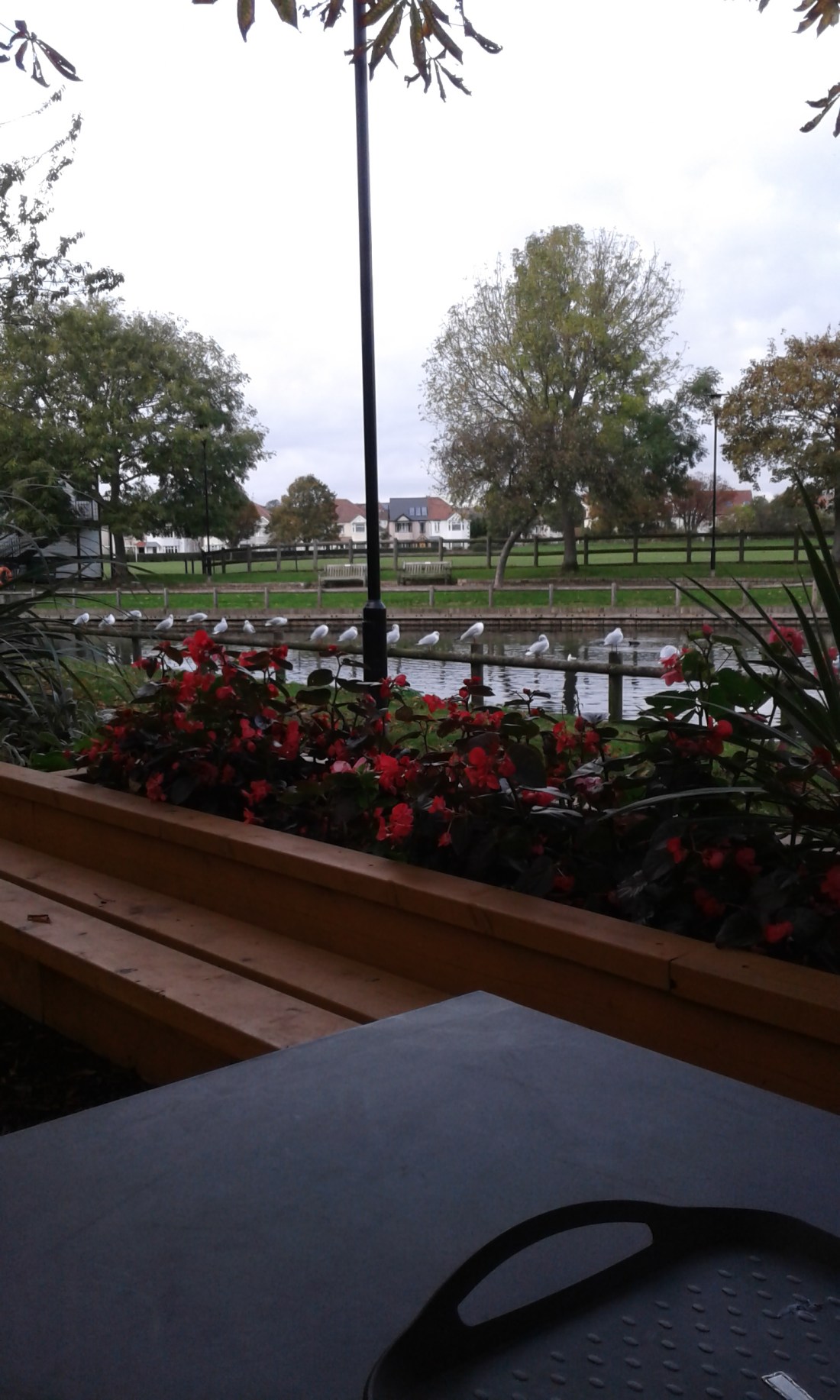
The overriding impression was of a quiet space where people walk their dogs and gulls flock. Low-key, open vistas, trees and grass and water. And good, cheap tea in the café. 80 pence for a decent-sized mug. And cake. Of course. Would have been rude not to. So British.

I loved it that not a soul in the place had any idea that they were promenading in a location that sits at the centre of a book about weaning our world away from the virus that is money. Maybe, one day, they will watch Southchurch Park on a cinema screen. It’s a possibility that I keep close to my heart.

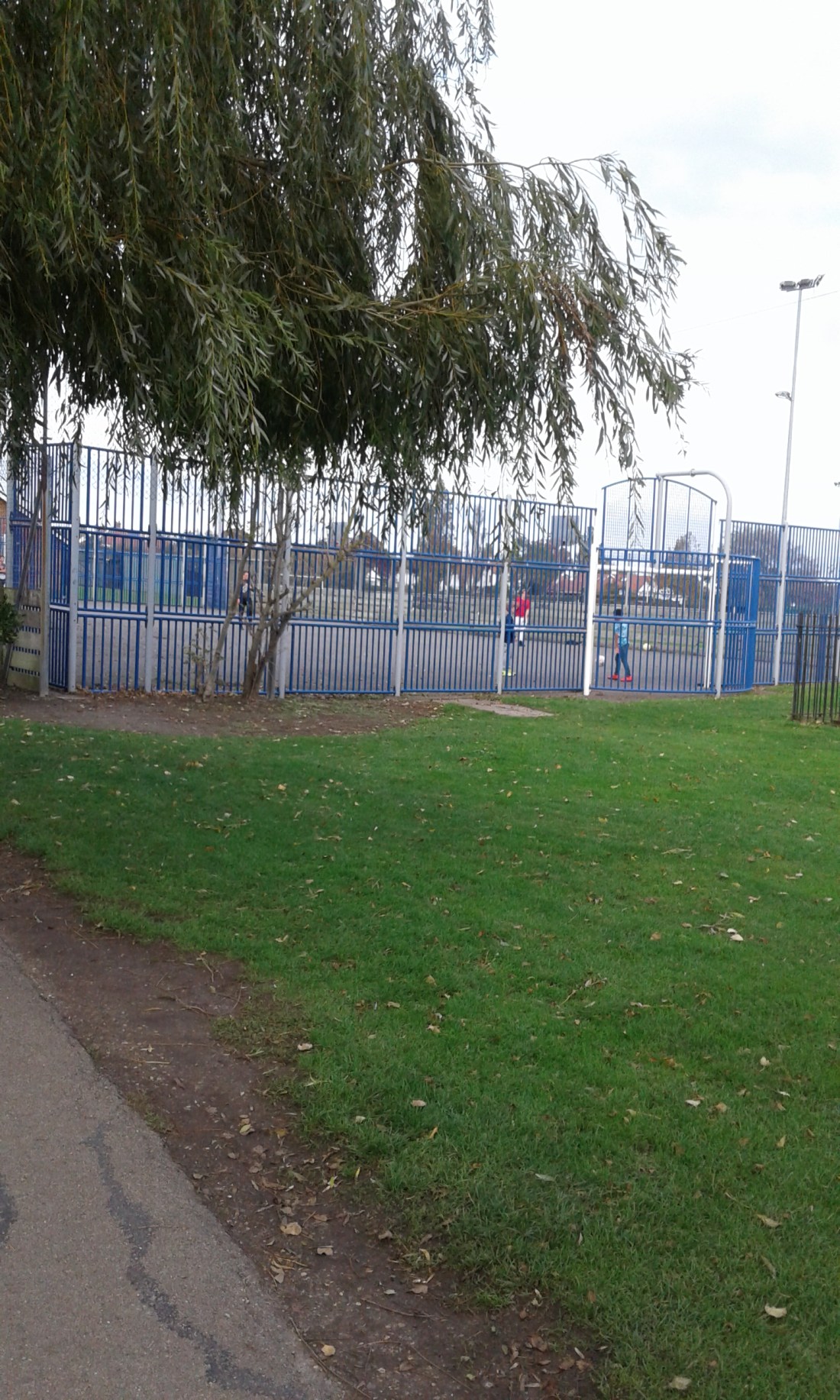
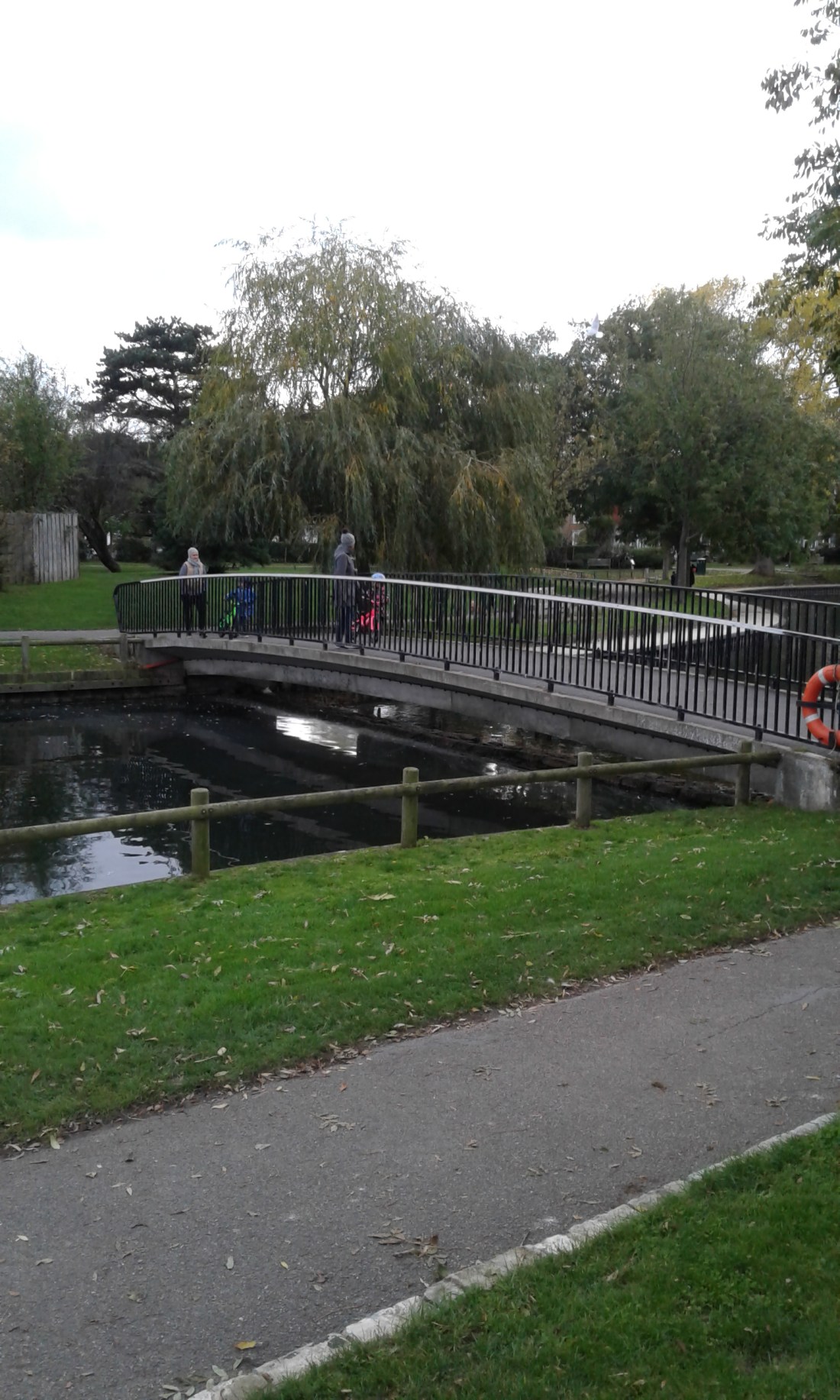
These pics give a flavour of the place.

Park1Park5


Park9Park10


Park11


Park12


Park13


Park14


Park15


Park18


Park20


The one below shows the sea wall at the end.

Park17

228. Liminality

OUT OF ESSEX – CHAPTER 18


“Whatever we build in the imagination, will accomplish itself in the circumstances of our lives.”

WB Yeats


On a warm, early August evening, a resurrected Mike Burper paced Southchurch Park’s perimeter. He paused at the park’s west entrance. Eyeing the battered residential facades of Kensington Road, he noticed a crew working late on streetlight repairs.

Mike swivelled east, surveying tents littering a football pitch, still covered in the flood’s thin white legacy. A spot where, 35 years ago, he had half-crippled an opponent, behind the referee’s back. Rubbing his right shoulder, he wondered whether a community could “secede from the sovereign”, as nearby graffiti recommended.

He had just come away from Little Venice, the nickname for the cafe and its surrounds. The park’s heart and hub, the cramped old building had survived the May 12 waters. Now, amid chairs and picnic benches, overlooking the model boating and duck lake, residents congregated, ate, voted and relaxed. Mike preceded each night shift with a coffee and a chat, often to a rousting backbeat from Parklife, the community’s DIY punk band.

After his deep salting in the estuary, which sat just two hundred yards away, Mike had felt inexplicably drawn in by Dan’s ad, splashed across print and online media and plastered on Essex billboards. “Do you want to live without money, close to your fellows? Can you contribute, in return for food and shelter? Southchurch Park is now open for a community adventure.”

The incomers were diverse, not easily stereotyped. Mike chuckled quietly at the pretentions of a few who had likened themselves to the Plymouth Pilgrims reaching Massachusetts in 1620, seeking religious freedom or a fresh start. He was more open to a couple who had touted the Wachowski Brothers’ futuristic notion of ‘quitting the Matrix’. But only because he had seen the film.

Some called the park the ‘Ark’. One or two reckoned they were ‘escaping tick-tock’. Mike saw these ideas as complete bollocks. Another occasional point of reference was Dial House, an anarchist-pacifist establishment in Epping Forest, on London’s outskirts.

He passed five tents pitched in horseshoe shape, wrapping around a gaggle of dirty-looking children, still up and playing. Southend’s growing poverty, and the hardships among its single parents, had become evident in the increasingly popular ‘Girl Named Jack’ blog, written since 2012 by journalist Jack Munroe, to help people cook as cheaply as possible. Yet only a few Southend family units had shown the willingness to swap familiar consumer traps and comforts for the unknown challenges and freedoms of the park.

Nearby sat a bright orange tent, home to Dutch captain Johan van Hoyte, still traumatised by his ride on a tsunami. After his release by police, Johan had quit the merchant navy. He had wandered into Southend, ending up in what he called “this liminal place”. Over a mug of tea one evening, he insisted to Mike that Britain had become a mentally ill society. “For so many, good times are gone, Michael. Now the monkey comes out of the sleeve.” He described a cave overhanging the River Mersey in Stockport, Greater Manchester, in which homeless people were reportedly living.

Nearer to home, the magnet of three daily meals and accommodation had pulled several dozen homeless individuals into Southchurch Park, both long-term sufferers and those usurped by the Big Wave.

Heading north, away from the river, Mike saw another new friend, Claire, filling a wheelbarrow with the whitened turf. She threw back her head of rainbow-streaked locks. “People here are creators, part of the 5% for whom mind control doesn’t work,” she was telling her fellow diggers. An Atlantis, Essex tattoo adorned her left forearm. She bubbled about the new solar panels adorning park buildings; and teaching the community’s children to engage in spiritual development. “Stan, we need new journeys to replace old greed-based models,” she incanted to a guy with a red beanie and a ponytail.

This was her brother-in-law. Almost another ATOS victim. Stan had survived his wife’s death, and a kidney transplant. Although the medication used to control the rejection process had caused severe problems, ATOS had cleared Stan as capable to work, stopping his benefits. Unable to buy food or heat his flat, and with nothing to live for, he had ceased taking his medication.

Now he was digging up the heavily salinated topsoil. In return for being nurtured back to health by acupuncture, aromatherapy, herbal and other park treatments – not least fellowship – he had supplied a car boot of bagged lentils and oats to the park kitchen. His laptop was available in the wi-fi area. Others cooked and cleaned for their keep, or deployed building, electrical and plumbing skills.

Mike reached the park’s northern border, where crews were also working on streetlights. Adjacent houses bore water tidemarks. He looked again at the sports field. It was bleached with salt residues, aside from a dark area, whose top layer was being stripped away. But for what purpose? How could you plan to cultivate land that would be infertile for years?

Gandhi seemed undeterred. In a quiet address to the Little Venice crowd, he had stated that a first crop of homegrown vegetables would be available from spring 2014.

Mike was opening to the idea of miracles. When Claire had described her Old Leigh escape from drowning, and the subsequent disappearance of her rash, he had volunteered his own unique story. How, when the tsunami ignored his punch and swept him across Chalkwell esplanade, his body had slammed into a hedge. How a rebounding surge flung him back out to sea, where his upper torso and right shoulder smashed into a stone monument. How he had floated down a vibrating tunnel where a 25-year old version of his mother waved cheerily. How she kissed him briefly, urged him to “stop wasting your life”, and faded. How, somehow, he had found the strength to grip the monument, the Crow Stone, which represented the furthermost reach of the Port Authority of London.

Now he patrolled Southchurch Park by night, keeping his new ‘family’ safe from intruders. By day he slept in the cricket pavilion, sharing a tiny room with an ex-soldier, Alex, who worked the daytime shift.

“Dad what are you doing here, with these weirdos?” his 30-year old son had asked several days ago, sitting outside the cafe. Mike told it straight. “I nearly lost my life, Josh. It makes you think. I never enjoyed my job. My pension entitlement covered my debts. I thought ‘fuck it’ and cashed in.”

Josh didn’t look persuaded. “When I heard about this place, something told me to take a proper look,” Mike continued. “Right away I could see some of the poor buggers needed protecting from yobs coming in the park. I asked if they needed a security guard. We made the job up, on the spot. I get a place to kip, three meals a day and physio treatment for my shoulder.”

Satan walked past, carrying plumbing pipes. “Who’s he?” asked Josh “He looks well hard. How much do they pay you?”

“That’s Sal. He trouble-shoots and tackles problems. Two other guys, Dave Dawson and Micky Gaze, organise things. Gandhi teaches people to make clothes. The pay is never money, we don’t use it. Like I said, food, a roof, a daily shower, medical care if I need it, and companionship. Friendship like I’ve never known. The big plan – which I can’t get my head around – is to grow enough food to be self-sufficient.”

“Gandhi? Wasn’t he some Indian git? Is he still alive?”

“He stood over there yesterday, telling us all that the future depends on what we do in the present.”

“Dad, none of this sounds like you. What about beers and watching Spurs?”

Mike’s hands ran through salt and pepper hair that was once ginger, and abundant. “Doing those things mean I have to scramble around for cash. And I’m not so sure about winning anymore. Does it matter? I know, it does sound weird. But Josh…This place. I love it.”

More than once he had thought these were the happiest days of his life. Mike’s first job had been to clamp down on theft. A group of Romanians in the first wave of incomers had baulked at earning the ‘merits’ tradeable for food and shelter. They had quit, taking community tents and sleeping bags. Males returned on night-time stealing sprees before Mike caught one and marched him to Satan, arm halfway up his back. Inexplicably, his hearing had sharpened. He would sit in the dark, pinpointing sounds.

Josh had more earnest questions. “How does this place pay for itself Dad? How will you get by in winter? You’re not young anymore.” Honest concern on his face.

Mike relayed what he had been told. “We have two main benefactors. Micky Gaze used his lottery proceeds to buy the park, and to pay for things like the solar panels. The journalist who scooped the tsunami story, Dan, has bought in a shed load of tents and camping equipment, a load of refrigerators and washing machines, and a job lot of sewing machines. Together, they have promised enough food basics to get us through year one. Dave Dawson – he’s a diamond bloke – has pledged seeds to get the farming plan motoring. After that we’re on our own.”

“Dad you’re gonna freeze your nuts off in winter.”

“Micky also bought some damaged houses around the park. He’ll draw up rotas. People here can get warm beds a few times a week. There are other houses at Leigh where people can learn meditation and yoga. Dave’s wife Sarah calls it ‘going inwards’; reckons it’s the other part of this adventure.”

Satan walked past again, winking at Mike. “He is unlike anyone I’ve met, Josh. He says we are doing God’s work.”

Mike handed his son some keys. “There’s only a week to run on my rent. I’ve taken the laptop and a few other bits for the park. I need you to chuck out the crap and give anything half-decent to charity or take it for yourself and the kids.” His other son, in Ireland, showed no inclination to make contact. “I’ll transfer you the deposit, in case I do need money.”

Josh spoke quietly. “Dad I think you’ve gone slightly mad.” His eyes moistened. “Let me know if you want to watch Spurs. The kids send their love.”


***


Back in the present, long shadows covered the car park, as the evening burned down. Not one of the park’s new residents cared that Mike had been a claims adjuster.

Another Old Leigh ‘survivor’, Sheena, always detained him. “People have joined together before and survived by barter and farming,” she said, arranging wood inside a chiminiere. “We must act as a big family, and earn our freedom by helping others, mustn’t we Mike,” she half-pleaded. In her tent teddy bears and family pictures were arrayed next to physiotherapy oils.

She had quit her job at Southend Hospital. Her husband carried on at home, paying the bills. “How’s the shoulder?” She spoke again before he could reply. “One of the ways we can work on minimising pains and swellings is by creating our own natural antibiotics. We can grow garlic, ginger and turmeric. We’re all too dependent on instant-fix pharmaceuticals, which is symptomatic of a larger problem – we have forgotten how to commune. Look at us talking now, Mike. It’s like an old-fashioned fireside chat.”

She lit the wood, flames darting. He smiled as she switched topic to Gandhi, who had set up in the Southend Manor changing rooms, overseeing the sewing machinists. “Did you know that Gandhi is the only human ever to lead a successful, non-violent mass civil disobedience campaign? He got a whole nation to boycott British exports, schools, jobs and courts. How can that person be here?” Mike shrugged, kept his thoughts to himself.

One warm hug later he set off for the children’s playground, bathed in crepuscular light. One of his tasks, in conjunction with Alex, was keeping an eye on the area, which adjoined Lifstan Way, on the park’s eastern side. The vote in Little Venice to maintain public access was almost unanimous. But locals sometimes snuck in at night for drinks and recreational drugs.

Three lads had jumped over the gate “How’s it going guys?” he said, focusing on the biggest. Satan quietly watched from the nearby flower gardens how Mike handled the boys, ushering them out while maintaining the banter.


***


By two o’clock on weekday nights – and later at weekends – any external threats had abated. Mike would sit outside the cafe, knowing Satan would bring a bottle to ‘see in the dawn’. The ritual involved the most impossible conversations. Sal opened their first session with a teasing delivery. “Your life turned upside down after you laid into that tsunami Mike,” he smiled, wickedly.

Mike’s face contorted. “Who the fucking hell are you?”

Sal introduced himself, fully. Before Mike could object, enquire or run away, Sal related how Maggie had persuaded God to slow down the surging currents as Burper slumped against the Crow Stone. “He punched a tsunami! We need that type of bravery,” she had urged.

“He’s a psychopath, for God’s sake!” God had said.

“Those people can be useful,” retorted Maggie, remembering various Cabinet Ministers.

Several large shots later, Mike had adapted to the notion that he had befriended the Devil, was working with Gandhi, and would duly meet Buddha and Maggie. The 18-year old Macallan Gran Reserva was to die for, with powerful sherry hues that soon numbed critical faculties.

“Just so I’m clear.” He paused. “God is female. And you know Jesus?”

“Know him? I’ve lost track of how often we’ve got rat-arsed.”

Satan told Mike they had argued over whole crates of single malt in The Place about starting a community without money, as opposed to using a new currency, or even a cryptocurrency. “God swears that it always goes wrong whenever money becomes common currency.” Mike scratched his ear.

“She swears wealth travels up the chain of command every time, and that central banks ultimately give their power away to private bankers. Only a handful of countries – like Cuba, Iran and North Korea – now run independent central banks. Libya had one before NATO invaded and sent the country back to the Stone Age.”

Mike tried to nod knowingly. As they stood taking a piss into the boating lake, after Satan untied the tail around his trousers, he was glad any sobriety had long departed.

Back at the table, Sal told how often Jesus had saved him from the worst part of himself. “Whenever I encounter the damaged DNA of any senior banking family, I completely lose it. How many trillions of dollars do these cold-hearted fucks, the blue-blooded gangsters, think they need, while hundreds of millions struggle or starve?”

It was bizarre to hear how Jesus would sit with Satan, sending his purple light. “But the hatred that those families breed, all that service-to-self shit, is getting worse.” Satan looked at him: “You reckon we can start to change that Mike?”

A new tack was introduced. “Nobody needs a bible. The censorship in the fourth century left a shell of the original, but the truth is simple. Jesus would urge you to focus on just a few things. Tell the truth; stick to it; don’t be vain, or power hungry; be very generous and kind; but watch out for those who would harm you, because they are in every group. Take care of the weak who cannot fend for themselves; and never judge by appearances. And forget the Church – you are divine, with no need of a middleman to contact spirit!”

Satan talked about “tricks of the eyes”, comparing this with “the true spirit of God that opens your eyes, and works through you”. Mike had to change subject. A big sip of the Gran Reserva made the field’s tents and half-white surface resemble a mad dream poking through the darkness. “Tell me again how old your three boys are?”

“Beelzebub is 2,254, Lucifer 1,570, and Belial is 990, still a nipper.” Hooting at that improbability, Mike felt his blood run cold at Satan’s constant disdain for the United States political, military and financial systems. “While we speak, elites in Washington DC are conspiring with Qatar, Saudi Arabia and Turkey to fund and arm jihadists in Syria. I’m talking support for ISIS and Al-Qaeda. On the watch of “peace president” Obama.

Mike was even more perplexed by Satan’s insistence that the Bush family had helped fund the Nazis. “That cannot be true Sal. I love America.”

“Sadly, it is true. But what do you expect from people that bear blood linkages to Europe’s royal families? Union Banking Corporation and Brown Brothers Harriman are on public record as channelling money to Hitler’s Germany for several years after the war began. Prescott Bush was a board member of both.”

Mike recoiled as Satan recounted how Hitler’s war machine was entwined with Western businesses. “Nazi trucks carried Ford components. US ball bearings were used in German warships. Royal Dutch Shell provided millions of gallons of free oil to the Nazis. Standard Oil invested millions in IG Farben, which opened a gasoline factory within Auschwitz. Allied bombers were told this was off bounds. These things are seldom mentioned by Disney Media, but don’t just take it from me – research it.”

Satan was insistent that core pockets of Nazi mentality still flourished. “Germany lost the war, but huge numbers of Nazi scientists ended up working at NASA after hiding in South America.” Mike chipped in. “Not much difference in the words Nazi and NASA”.

“That sort of frivolity gets the word ‘theory’ added when some very real conspiracies are discussed.”

Mike wondered how he had ended up as Satan’s drinking partner in a Southend-on-Sea park. He awoke each afternoon with upended beliefs. Watching TV on a café laptop, he noticed how a BBC news item on World War One veterans described the horrors of French and Belgian trenches. It was followed by straight-faced newsreaders announcing that the US – and possibly Britain and France – were preparing to drop bombs on Syria to ‘address’ its complex problems. He watched programmes where experts argued that taking away UK welfare benefits would “make work pay”. In a market where even graduates struggled for employment.

Satan’s over-arching idea was that traditional society was finished, as old mental patterns and habits would soon be cast off like snakeskin. “Think about this: you live in a country so out of balance that a government let Jimmy Savile, a psychopath and paedophile, run a high-security psychiatric hospital at Broadmoor.”

New dawns peeked out each day as Sal talked the sun up. “You are part of a new model unravelling here Mike. God wants one great last period for humans – and you will have the utter privilege of building your soul and exercising your free will as you live through the death rattle of capitalism and neoliberalism. Those twin fuckers have been eating away at loving human culture like some kind of invisible Pacman, and you will help steer their demise.”

He was a realist though. “Hierarchies have had it, but Rome didn’t collapse in a day.”


227. The Three Elms

20191026_121021


I received a sad surprise one afternoon last week, when cycling past the Three Elms pub, on the Mashbury Road, just outside Chelmsford. Like many other rural pubs in our vicinity, it has closed its doors.

Couldn’t say I was shocked, but I did feel for the landlady, who had made a steady effort to bring in trade, through music evenings, mini-beer festivals, discount offers on the food and other promotions. The beer selection was generally good.

Maureen and I sat out front one sunny lunchtime, eating a lovely plate of fish and chips, while the host told us how she and her partner had sold up in London and bought the pub. She was living her dream. But acknowledged the challenges.

The biggest was that no more than a couple of dozen people live within easy walking distance. She had to try and drum up regulars from further afield through decent grub or other means. The first time I visited was on a quiz night, when the place was full. Ironically, the visit came after cycling with my old mate Tony to The Fox in Mashbury, only to find that it, also, had shut up shop. We popped into the Three Elms on the way back.

I walked to the Three Elms once with my good friend Jono and his dog Ruby, across the fields from Broomfield. A dark winter day, so we necked a nice few single malts. On the way back, I realised I’d left my phone on the table. There it was, behind the bar, handed in. I was so grateful.


index


My most recent visit was a Monday night in early August. After the last evening of the transcendental meditation course. There must have been 15 or so people inside. Not bad for a Monday. I sat outside, enjoying a pint, happy that I’d started something significant. With no idea that the struggle to make ends meet behind the bar must have been coming to a head.

Rural pub numbers will continue to decline. Top class food seems to be the main way to keep going. Out in the wilds of Radley Green, a place called The Cuckoo has a flow of regulars. I was out there a few months ago, watching the cars pour in on a Tuesday evening. A quick look at the menu said you would be paying at least £50 a head. Once upon a time, Julian Dicks (ex-West Ham) and his Canvey Island mates used to have a Sunday afternoon kickabout on an adjacent soccer pitch after sinking a few pints.

My favourite mid-Essex pub, The Compasses at Littley Green, has discreetly added a motel on one side.  Yet the bar still breathes out the past. The beer is hand pulled, in a separate cellar. At the other end of the spectrum, the Green Man at Howe Street has had a gleaming £3 million refurbishment, after a Galvin Brothers takeover. It heaves with punters, but if you want a single malt, the prices start at £7.50 a shot.

Anyway, RIP the Three Elms. I will miss its options, and its kind proprietor. I don’t imagine it will be coming back as a pub.

20191026_121055