126. Widening my world

download

In dire need, I came to Hanmi Buddhism in autumn 2011.

Tightly gripped by the financial pincers of the taxman and a debt management plan, I had been working excessively, probably drinking too much, and trying to manage an enlarged prostate. None of that was new, whereas I had had just wrenched myself away from two friends. The pain of that destabilised me for weeks (Blog 10).

I longed for something. No idea what. Something healing, compelling, transforming. Something to add layers of meaning.

My wife and I were sitting on the pier in Southwold, in Suffolk, with her friends. I was 54, feeling like no more big adventures lay ahead. The sun was smashing through the windows. Simultaneously, the rain squalling against the panes. Thousands of birds were coming past, in formations, migrating south, hugging the water to duck the wind. On its own that would have been an all-time memory of vivid seasonal change.

Then our mate Jean said: “There is a healing meditation that I’ve started going to that I think you might like.” I almost grabbed her by the throat. ‘Where is it, when can I go?’

Undertaken within the Hanmi Buddhism centre in my home town of Chelmsford, in Essex, the meditations were transformative. I knew it was for me as the first session unwound at the temple, tucked away down a dark corridor at a Chelmsford working man’s club.

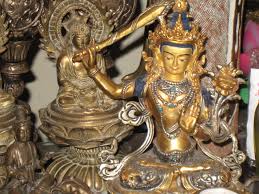
The practice was highly ceremonial, but simple, using a combination of mudra (hand gesture), mantra (silent chant) and the visualisation of light, in different colours, streaming through and around my body. The feelings were ecstatic, as if the most gentle, etheric orgasm was rising through my body and culminating in indescribable pulses of pleasure in my head. Maybe a distant cousin to trance music or the MDMA half-pill I tried once.

This branch of Buddhism is only tenuously established around the western world. It claims to be from an ancient mystery school, whose secrets were – I was told – hidden and preserved through centuries of barbarism.

images

Somehow it made itself available where I lived. More practically, problems started to unclutter. Things happened that were generally helpful.

Above all, I gained an efficient relaxation tool available in times of stress. Linked to this, I believe, was an improvement in a couple of relationships that I had struggled with. Other good results that I attributed to the meditation practices included a general improvement in my sleep patterns. Within weeks, I was telling anybody who would listen about my new love.

Defying logical and empirical explanation, somehow operating just out of reach of the five senses, the meditations seemed to effortlessly wrap up my past and present feelings and emotions and go to work on making me feel better, saner, happier and healthier,.

My dreams became clearer, less frantic. I began writing creatively again, after two decades of banging out endless analysis of finance and energy trends. This period triggered an in-depth look at the world’s financial and money systems, and then my novel, ‘Out of Essex’. This featured Buddha in a team of super-heroes (Jesus, God, Satan and Gandhi) who pool their talents to rid the world of money.

I started walking, sometimes twice a day. Which in turn informed the writing, as well as increasing fitness, reducing weight and sharpening my outlook. On one walk I decided to re-engage with some very old friends from Southend-on-Sea, whom I had spurned for decades. Dreams further reinforced that idea. The subsequent joy of reconciliation was powerful. As old habits died, I experienced waves of optimism and sociability beyond previous norms.

At another level, I learned of a time and culture immensely different to ours. And I liked how the Buddhists nailed out their stance – life is meant to be hard, and challenging. Shit happens, so that you can learn. You will meet people who you have fucked and fought with before. They may be your parents, children, spouses and friends/enemies, but all are there to work out past karma.

Eventually, around one year later, I backed away, in the face of too many requests to give up my time for chanting and courses at the temple. I had commitments that would be compromised, and the taxman had me by the knackers, necessitating prudence.

I quit going, but still chanted. As time passed, I stopped the meditations completely. Maybe they will be revisited when there is more time. Quiet contemplation has become my substitute (Blog 121).

images (1)


125. The girl in the car park

images (3)


Working behind the bar at the golf club was eye-opening and sometimes great fun. I struck up relationships with several guys who didn’t want to go home to their wives. Mickey Gough was one such, a factory owner who would imbibe copious double Famous Grouse whiskies, tell me his many views, enquire about mine, and then, near midnight, somehow drive home.

Another was a plain clothes policeman who worked out of Romford nick. Let’s call him Charlie. He would often arrive with his police partner, and work out his shift with a few beers and a game of cards. One night he insisted I stay open way past the licenced hour, and then take a ride down to the station. I slept in the car while he checked in. On the way back he recommended being a copper.

One Saturday night he turned up at the bar with two women. One looking younger, and one older than he. I felt that the younger female might be his mistress, and the more elderly his mum. It was some kind of a disco. His potential mistress started chatting to me over the noise. Charlie looked happy. So, having quaffed a beer or two, I asked if she fancied a dance. To see how spontaneous she could be, I suggested we use the car park. It was a hot summer night.

She assented. So we shuffled a slow smooch in the captain’s space. And she told me she was Charlie’s daughter. That rang a proper alarm bell, as he was well built, and not immune to talking about the violence occasionally used in the job. The other woman was her mum, Charlie’s wife, she said, enjoying my consternation.

Anyway the evening went on, and we chatted across the bar. Charlie and my dad put their heads together, and it was suggested that I should drive the girl back to her house, somewhere over in Collier Row. The eye said yes. She had nice looks, but the brain was raising objections. Not too much in common, it said, and already too much talk about money. Above all, a dad to be highly wary of.

At her gaff, she put some music on. Smoked, offered me drinks. Then her parents returned. They disappeared swiftly upstairs. It was so hot that she took off her top, revealing some kind of under-singlet. My thoughts were mega-mixed. But eventually dominated by the uncomfortable vision of Charlie laying awake, listening. Maybe deciding to come down if new sounds reached his ear. Also, looking ahead, the equilibrium that characterised my evenings as a barman was worth preserving. Charlie wasn’t someone to antagonise. So we carried on talking.

Can’t remember her name. She turned up at the bar again the following evening, with her sister. And that was the last I saw of her. Hope her life turned out well. I will always remember her as the girl in the car park.

images (2)


124. The girl at the bank

download (1)


A month or so after I returned from Birmingham to Essex, mum cornered me in the kitchen. She told me, tearfully, that dad was having an affair. The girl at the bank to whom he paid in the club takings each day had taken a fancy to him. He was 51, and she was much younger.

She had a small flat somewhere, which he would visit some evenings. Mum talked, with huge pain, of the “ecstasy” which Eric had spoken of, and which she was no longer able to provide for him. He was, she said, thinking of moving in permanently with the girl.

Mum’s tactic was to wait it out. For the first time in many years, she asked me for a big hug. And extracted a promise that I would always be there for her.

When dad realised that I knew, a sheepish guilt poked through. Unlike anything I had ever witnessed. I responded by blanking him for a while, whenever we crossed paths. One night, working behind the bar, I was approached by one of his friends, who tried to explain Eric’s position. That he was in the grip of strong passion, and had never intended for it to be hurtful to his own family. And that he would like to talk. “He wants you to hear him out, Kevin,” was the recommendation.

As far as I was concerned, he could make the first move. I didn’t want to hear it, but would undoubtedly have listened, had he insisted. He never did. Domestically, it was uncomfortable to be near. Mum would sometimes slam down her newspaper with a crash as they watched TV together, but say nothing. How the hell did they manage to sleep in the same bed? I spent much time in my bedroom, away from the toxicity.

In the end, things fizzled out, and ‘normality’ resumed.

Even at the time, I could see both sides. Mum’s utter pain at being second bested, and potentially deserted, for a younger woman, after decades of being a faithful wife and dedicated mother. I could feel it pouring out of her.

And dad being led full sail by his genitals. Being desired by a young female must have polished his ego to a hard, priapic point. The feeling that “I’ve still got it”. Leading to the “should I stay or should I go” question. Instinctively, I could see how that worked.

Beyond discomfort at my proximity to events, and wish for greater family harmony, I didn’t see right or wrong. Not black and white. Both views were understandable with a shot of empathy and a dash of resonance. Better to keep out of the way and let them work it out themselves.


images

123. Breaking out

images (2)


O what a tangled web we weave

When first we practice to deceive


More than once my mum quoted that classic old line from the Walter Scott poem, as I went about trying to come to terms with my lie. The mistruth that a can of weed-killer had fallen on my head. I did tell the truth a few years later, but the interim was as anxious a time as I can ever remember.

The failure of the ill-considered underlying move, to regain a full head of hair without people being aware, was devastating. Never far away was the crippling worry that every single human I encountered would see something not quite right about my ‘Barnet fair’. The saving grace was probably the vigour coursing through my 22-year-old body. Working as a golf course greenkeeper out in the sunshine helped keep me going.

In the end I had to begin renewing acquaintanceships. Probably the two mates that were most likely to let me reintegrate in my own way, without asking probing questions, were John Madden and Shaun Wilson, in no particular order.

On March 1st, 1980, I drove my parents’ car from Romford over to Luton, to see West Ham play at Kenilworth Road. Score 1-1. I had started watching the Hammers again at Upton Park that season. But this game was very much a prelude.

The post-match nerves were wobbling wildly as I navigated across to High Wycombe. Huge fear and big anticipations were wrestling fiercely in my nut. No idea how it would go. Geordie lad Steve Smith had a job working for the Forestry Commission, and an accompanying cottage. Shaun had come over for the weekend from Amersham. Little Gav was also there, and opened a can of strong beer for me, before proceeding to pull back my fringe and inspect the transplants.

Not sure that it was mentioned after that. The evening was pure unplanned existentialism. I was wide open for a purging. We hit the town and drank like fishes.

We were thrown out of a pub after I pissed in the pocket of a billiards table. Why did I do that?

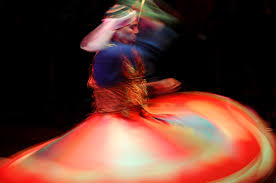
Steve steered us to a club where the only white customers were ourselves. Fantastically bass-laden reggae music shook the floor. I stepped out and threw myself around madly, the only dancer. The vitality flowing through me had been stored up for months. Like a whirling dervish I was. Spinning and flailing around and round. The whites of the black guys’ eyes dotted all around the walls. So drunk that I wondered at one stage if I was in a dream, or had left my body. All the fear had gone, so far out of my psyche had I ventured.

images (1)

Next memory is of standing on a ridge, in the small hours, looking down at the town. And then waking with a horrible, deliciously familiar hangover. Steve cooking us bacon sandwiches. Feeling that a barrier had been vaulted.

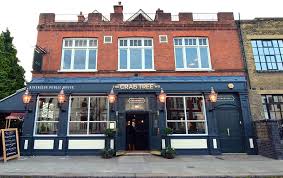
And then back down the A40 to Hammersmith, to see John and Tony. Everyone had to be up for Monday morning work, so only a few beers were imbibed in the Crabtree pub. Again, nerves surmounted, jokes told, and much inconsequential catch up chat. But such a delight and a relief to feel that I was in circulation again.

download (1)


122. New rapture

download

The year after the hair grafts was a struggle, trying to come to terms with what felt like an act of self-mutilation. I worked to build up some funds, while staying away from friends until my appearance had some kind of congruity.

But despair floored me regularly, back at the parental home. The paths back to the juice and energy of 1976-78 had disappeared. I kept smiling, kidding myself and others that all would be well. Inside, utter anxiety not only at my own post-transplant plight but at what you had to do to get on in the world. My contemporaries were signing up for careers, treading hierarchical corporate paths in some cases. From my gloomy, jaundiced view, they were throwing away the key to the glorious joy ride of being young.

Nonetheless, within a relatively short period, a new source of energy infusion showed up. It would eventually drive me out of bed while others slept, and sear untold neural pathways through my cerebrum for over three decades. It had probably always been close, lurking in the genes, waiting for the trigger.

In early June 1979, just after my finals, I was preparing to return to Essex. Worrying incessantly about my bloody hair, I noted that it was Derby Day at Epsom racetrack. The fiver left in my bank account was then tradeable for at least 10 pints, and a far greater sum than I had ever thought to wager. But I thought: ‘Why not?’

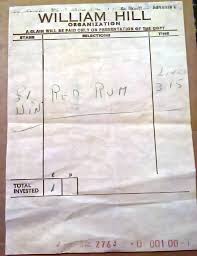
Strolled in the late spring sunshine to a local bookmaker, and placed the blue note on Troy. It was recommended by a tipster in the copy of the Sun pinned to the bookie’s wall.  No other reason. Went back home and listened to the race on the radio. With a substantial amount of fear. So I almost jumped through the roof as the commentator announced that Troy was eating up the ground on the outside of the pack. It won by a streak, marking my first ever “high” from a winning bet. Waves of pure joy flooded through me as tension dissolved into relief. I could now pay my last month’s rent with the £30 profit. That was the breakthrough bet, hook wager number one.

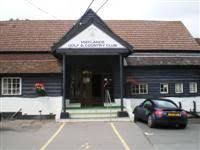
A month on, working at Maylands Golf Club in Harold Park, Romford, I started to become fully aware of Britain’s deep-seated gambling culture for the first time. Eric, my dad, had somehow made the startling transition from scrap metal merchant to club secretary. For every big golf tournament, he would chalk up an odds blackboard so that the players could bet on themselves or others.

In the golf club bar where I worked some afternoons and evenings there was a constant dwelling on horse racing among a group of businessmen who were privy to inside information from various stables. Astonishingly, many of the tips seemed to win, especially in the biggest races. Punts by these guys on Known Fact in the 1980 2,000 Guineas, and Popsi’s Joy, ridden by Lester Piggott in the 1980 Cesarewitch, spring to mind. Both of these selections were tipped to the bar proprietor, Jack Townsend. Quite reasonably, my brain asked how anyone could possibly predict the outcome of contests where temperamental four-legged beasts were steered by dwarves.

They surely could not, but I had already commenced betting in 5 and 10 pence doubles and trebles. Nothing the size of the Troy bet, but with the occasional 50 pence or £1 win single if feeling highly inspired. The kindlings of a new world were lit beneath me.

A betting shop a few hundred yards away became the subject of a visit every lunchtime. My ears pricked up hard if anyone voiced an opinion about this game, including Reg Brown, an old-timer who slept in the stables at the club and caddied for beer money. Brother Neil was happily helpful, unloading his decent knowledge whenever I asked.

The tips didn’t always win. Tony Palmer accompanied me in June 1980 to Epsom to back Noble Shamus in the Derby. The horse started at huge odds, 200/1 or something equally silly. For all I know, Noble Shamus is still running.

A few weeks later, I took a series of trains across from Essex to Ascot, on a Saturday morning whim borne of multi-level alienation from the world. I could think of nothing better to do.

At the racetrack, I gained access to Tattersalls, the enclosure for the plebs, away from the top hats. Piggott was booked for Popsi’s Joy in the opening 2 mile handicap. Robin Goodfellow of the Daily Mail had made this one his nap (best bet of the day). 7/1 appeared to be a nice price. I wagered £3 to win. Popsi’s did the job, not for the last time that season, with Lester’s arse characteristically jutting towards the sky as they passed the post.

Via Delta was the Sporting Life nap in the next race, a 5 furlong ‘sprint’. It went off as the 3/1 favourite, carrying £5 of my dosh. And won by a length. Astonishing.

So I risked £10 of my £36 profit on Fingals Cave, who trotted up at 2/1 in a middle distance race. My next wager bit the dust, so I quit the joint, about £50 ahead, and went on a solo drinking tour of the West End.

Hook number two. £50 was good money in those days.

My experience of drugs was limited. But the sensations from backing winners were comparable to some of the best outcomes I had known from beer. That newborn feeling as the first pint or two kicks in. To be clear, I realised that such a profitable day bore no relation to any discriminative skill on my part. I got lucky, and knew it, but had experienced a genuine high, and a bulging wallet. As I paced from London bar to bar, it dawned on me that a learning curve might be available. So that my betting could be steered by my brain in a way that would yield both steady profits and mental ecstasy on a regular basis. Was this near-perfect mix of the visceral and the cerebral not something worthy of pursuit? Or was DNA just doing its irrepressible thing?

It was a slowly opening world. With such mighty food for thought.

At some stage, I had acquired a view – much to my mother’s horror – that most work was for mugs. The massive influence here was American author Henry Miller, whose books I had begun to read in mid-1979 as if they had been written for me personally. Drop out my boy, cajoled Hen. Read, drink, fuck, write, wassail, sleep, travel. But don’t become part of the system, don’t sell your soul. Work to live, if indeed you must work at all.

Similar veins of discourse had issued from many of the writers in the New Musical Express. These reinforced my critical knowledge acquired from years living on a grant. You could live like a king on next to nothing. And in my opinion have a better time than any accountant, doctor or lawyer. Only a handful of my pals thought identically, Steve Lowndes being the most prominent of these. Between us we hatched a myriad of plots and plans to subvert the received order.

My basic tactic then and in the years ahead would be to hold down a manual job for as long as I could stick the boredom, and then rest and plot again. I have never been lazy, and the reality was that most of my occupations have clocked up far more than 40 hours a week. I drifted into simple occupations where the automatic nature of the activity usually allowed me the undisturbed space to dream. From 22 until the age of 35, when my years as a journalist began, I worked as barman, greenkeeper, the Thermos nightshift, caring for vulnerable adults, a short teacher training spell in Canterbury, then ice cream salesman, window cleaner and milkman.

A dream came to me in the summer of 1980. Just before disappearing to Greece for three weeks with my friend Mike Beaver, I dreamed of a horse that won a race. Its name was My Mind Told Me.

Back in Harold Park after a delicious holiday, the rattle of the hooves down the racetrack was increasing shaping as my rapture runway. Dad would occasionally buy me the Sporting Life, which I would consistently bin due to the excessive level of incomprehensible detail. Given that I saw next to no future for myself in terms of a career, it was a puzzle that would clearly require much harder work.

In the meantime, I read the views and followed the selections of the tipsters in The Mail and Telegraph, which my parents subscribed to. As the racing card steadily came to form the most important part of each day, it dawned that I needed to make the jump away from the opinions of others into a logical selection method. Maybe one plagiarised from a winning punter. Or perhaps as a result of a joyous new quest to figure out which parameters counted crucially in horse racing.

As a working hypothesis, it was no bad starting point to recall that at school you could predict with some certainty which peers would win or place in a 100 yard sprint. Same result, time and time again.

The key difference with horses was that in most races (called ‘handicaps’) they carried differing weights, to level their chance of winning. Nonetheless those running well in recent races would win more often than those who were out of form, weights notwithstanding.

To drill down into these ideas, I began to read a weekly publication by the name of “The Sporting Chronicle Handicap Book”. It served as my personal toe in the door for the comprehension of racing form. A new language to master, pivoting around numbers.

The key, I continually told myself, was the will to learn, which would be required incessantly to drive past the countless setbacks that would inevitably lay ahead.

Around the time of the Ascot visit, I would often stay with John Madden and Tony Palmer in Hammersmith, London, at the weekends, and would never fail to be amazed at the wealth oozing out of the capital. While it looked attractive, the necessary grind of 9 to 5 in a suit and tie seemed like a terrible and unoriginal way to go about inhabiting a human body.

40 or so years later, I give the young Kevin a huge thumbs-up and a big wet kiss for following his heart, and doing his own thing, however naïve it may have been.

images

121. Making sense of it all

download (2)


Only in the last seven years have I begun to realise that most of the noises firing off inside my skull are not objective reality. That the whole worldview churning around – consisting of ideas, stories, labels, names, political parties, philosophies, beliefs, religions and opinions – is little more than habitual mental narrative, often quietly steered by formative education and reinforced by mass media.

From childhood, we are taught how to think like everyone else. This dictates our perception of the world and atrophies one of our best attributes, discernment. Trying to reject or unwind perceptions that are often decades-old can incur the cost of stigmatisation by friends, workmates and family.

Big Dad used to talk about the crab bucket, where any potential escapee would be pulled back down by its permanently-ensconced companions. Back to ‘normality’.

To make life less confusing and difficult to understand, in a swirling babble of narratives and counter-narratives, requires some solid ground as a base. My experience is that being in nature offers a good starting point to contemplate essence.

Maybe an hour or two walking, holding a fishing rod or digging an allotment. Where you go from there will be unique to you. Stillness and quiet can be good friends in this process. My experience is that silent contemplation, without the mudras and mantras of a formal meditation, can be effective at stilling the mind. And for receiving information.

One of several people who have helped my own dedicated inquiry is a bloke called Neil Kramer. Like Big Dad, he has moved from England to California, but retains a delicious Mancunian accent. He has a website, where a couple of dozen podcasts are free to download.

In short, he says: ‘Your philosophical path, your inner exploration, will be your own work, but here are a few tips I’ve picked up while thinking about this stuff’. Nothing is rammed down your throat. More a case of ‘I offer this for your consideration’.

Inevitably, I don’t agree with all of his discernments about the external world. But his rejection of political correctness as a censorship tool, that places a stultifying lid on our imaginations, feels right. As does his notion that many of society’s structures act primarily to stop us thinking for ourselves. His view that ‘normal is not your friend’ resonates very deeply.

I’m grateful to him and all the others that have chipped in along the way, in the quest to make sense of it all.

download (1)


120. Hyde Hall

download


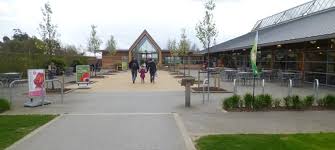
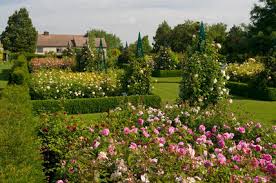
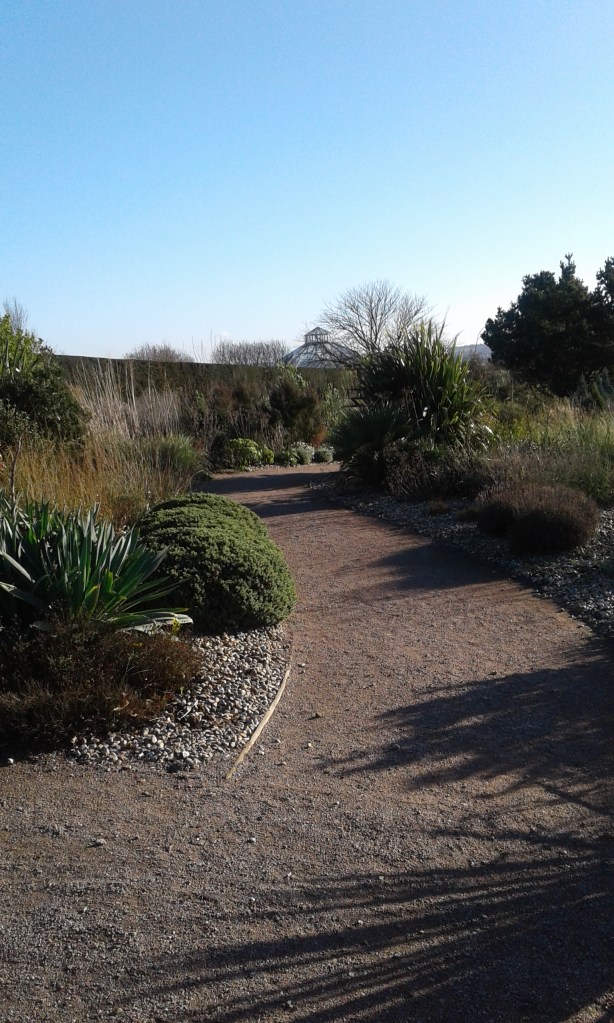
To break the domestic and work routine, we like to drive out to the Royal Horticultural Society gardens of Hyde Hall, which sit about 4 miles south-east of Chelmsford.


images (2)

Lots of other old Essex gits have the same idea. So a visit gives a broad idea of how decrepitude may settle further upon us. Whatever your age, your eyes lap it all up.

20190117_125443

I used to deliver two pints of red top to Hyde Hall, three times a week, when working the South Woodham Ferrers milk round for the Coop. In those days, in the early 90s, it was not too much more than a private botanical centre, atop a windswept hill, surrounded by old farmlands.

20190117_133040

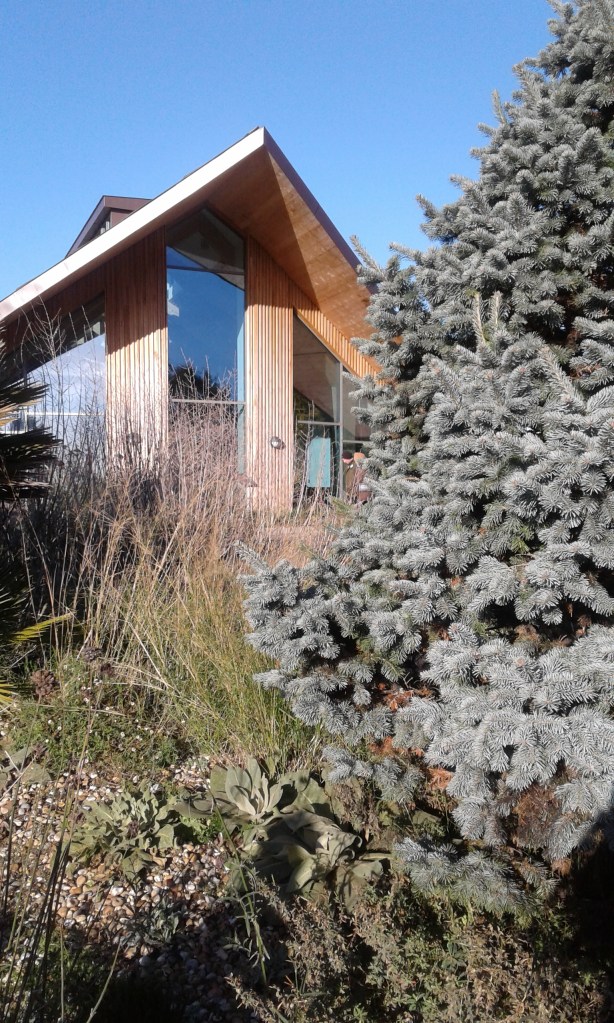
Now you see it a couple of times a year on Gardeners World, as it expands and innovates.

20190117_133000

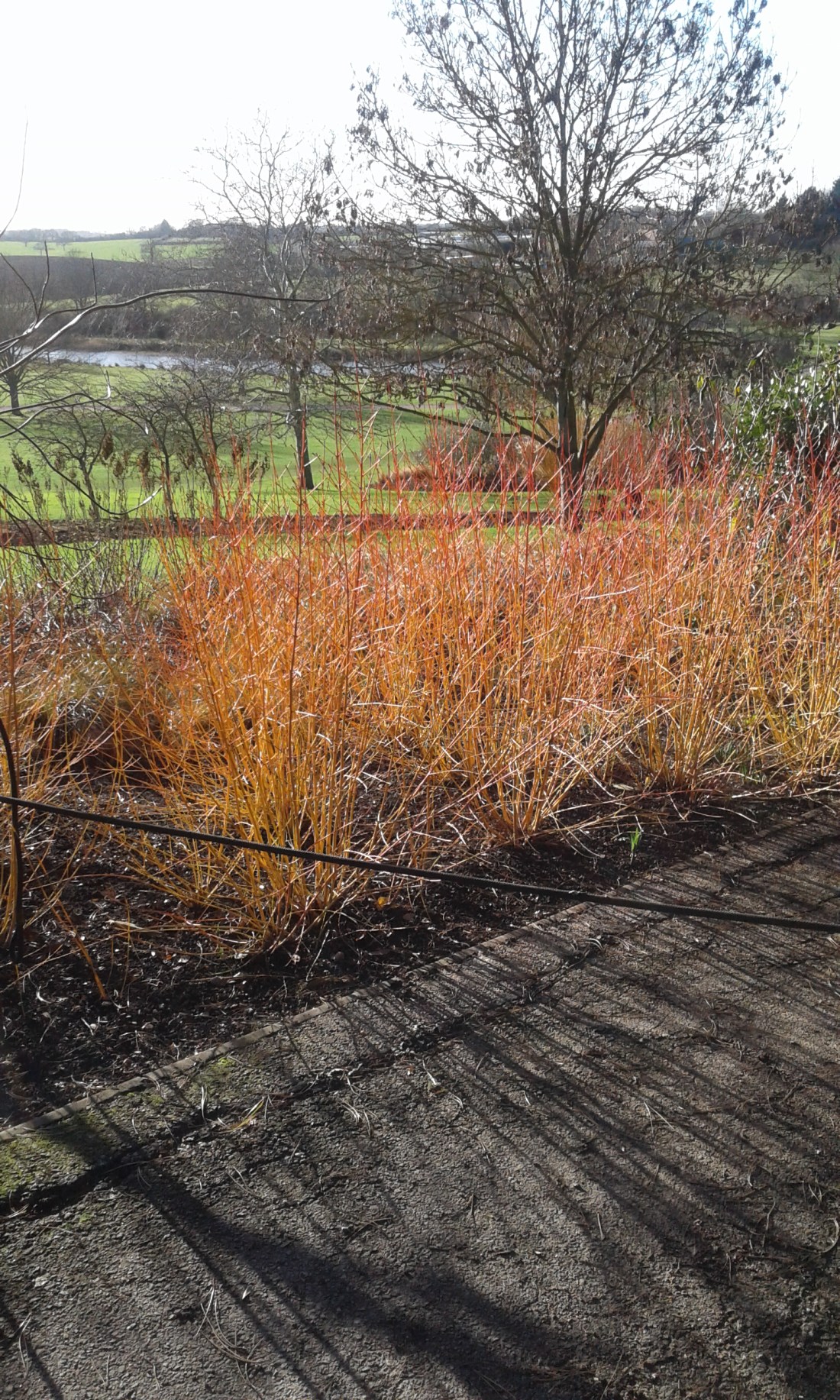
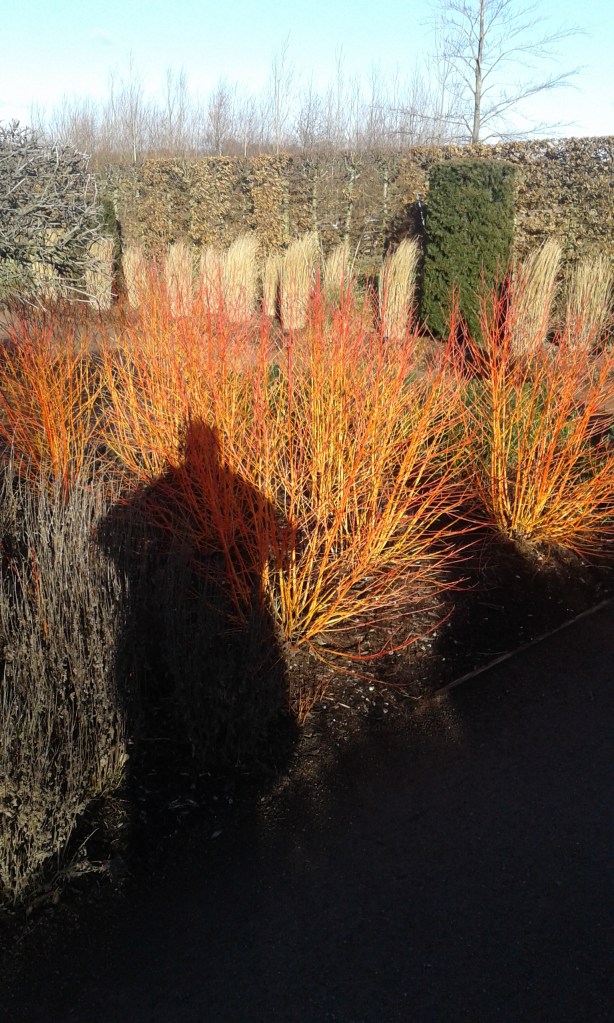
At this time of year, the Cornus Midwinter Fire dotted around the estate are stunning.

20190117_133319

Also known as Dogwood.

20190117_134015

Perfect accompaniment to the wind and sunshine. I wanted to take a cutting, but sensed that this would lead to trouble of some kind.

20190117_134055

More than ever this year I have appreciated the beauty of the low January sun, and the shadows which it casts.

20190117_133045

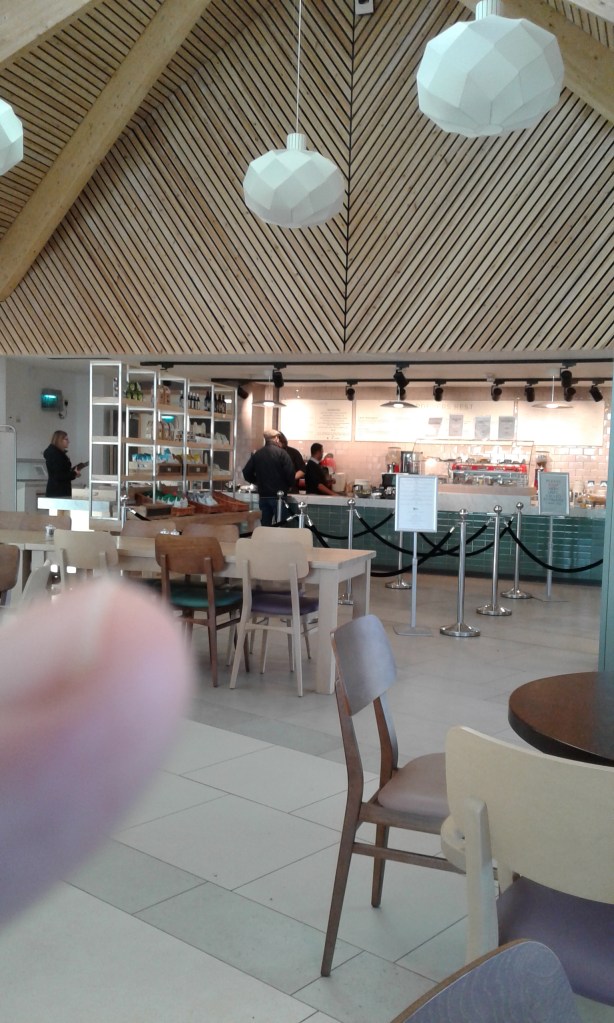
The Midwinter Fire were the joint highlight yesterday, sharing the honours with the spicy basil and tomato soup lunch. And a decent hunk of walnut bread.

20190117_132224

So good to get out and feel the elements.


119.Brexit

images


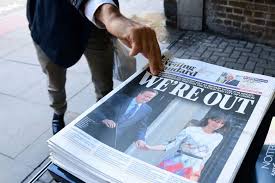
The passion for debating Brexit that grips so many friends and acquaintances cannot be found here. I spoiled my ballot paper back in June 2016.

Firstly, I couldn’t decide. The freedom of movement within the European Union appeals enormously. As does the lack of war in Western Europe since the EU’s beginnings in the 1950s.

On the other hand, the EU’s never-ending centralising thrust holds no appeal. That unelected humans in Brussels can have any say in my life, or have the power to override British courts, is not appealing. The logic trail leads to a world government. No thanks.

My 50:50 stance could have been tipped either way. One man’s bent banana is another’s nourishment, and a third man’s sex toy. I remained open to a compelling argument.

Instead, I started to drown in the platitudes and baseless propaganda from both sides. Economic “experts” who could not foresee the 2008 financial crash were suddenly able to give relatively precise predictions about the future under either scenario. Absolute bollocks. The hate speech ramped up, so that the term ‘racist’ was bandied about to include people who simply felt strongly about British sovereignty. Yet poor Jo Cox was murdered.

By the day itself, the polarisation was enormous. It was physically and emotionally palpable, and destabilising. I felt the rage travelling through me…….in favour of both sets of arguments!!

Is it fanciful to suggest that the huge storms buffeting the UK that day reflected humans boiling up inside? As above, so below?

Abstaining was the sole option to keep any sense of equilibrium. So glad that I made that decision. I wrote all of these reasons across the ballot paper. Didn’t want any part of it. Nobody “had” to vote.

The Brexit fallout has also left me cold. Both main British political parties pledged to abide by the referendum result. Yet the efforts to wriggle out go on. I am genuinely puzzled that people who extol the virtues of a democratic vote can nonetheless contemplate a second referendum. Maybe that is because I did not mind which way the mid-2016 vote went.

My perception over the decades is that corporate interests get their way, whichever puppets stand at the prow of the ship. The French Yellow Vests seem to understand this.

Interesting to see how it all pans out. It’s difficult to be optimistic.

images (1)


118. Wish you were here

20190115_100918

My blog rule is to tell the truth. Although I might misremember details, or omit items, for discretion, the aim is to complete number 365 in September with the thought that, yes, this is how it was for me. No embellishments.

Revisiting the story of the hair transplant on Sunday drained me. The day felt grey, morbid, depressing. Some of that was due to driving to Cheltenham and back the previous day.

However I did enjoy lighting the birthday candles for my mum, who died in 2006, and the offerings. I have no experience of how to communicate with the dead, and of course no certainty that such a feat is possible. Nonetheless I said a few words to her picture. Something like: “Sorry that we’ve been ignoring you for so long mum. That stops now. If there is anything you can do in return, to make our lives a little easier, we would be grateful. Will always love you.”

Might offer her a slice of chocolate cake next time. And perhaps a book of crossword puzzles. Things that made her purr with pleasure.

Yesterday, Monday 14th January, the feel of spring came through to me. Walking through the Langleys, just before noon, it felt like a sixth sense suddenly kicked in. I couldn’t say that there was a different smell, or that the light was tangibly brighter, or that sound travelled differently to my ears. Maybe tiny elements of each of those impressions? But the overall effect was a surge of joy, that near-walking on air feel that a late March day can stir in the soul.

The flood of happiness was immense. And has stayed with me. I awoke at six this morning, made a strong cup of coffee, and sat with the lights off in the lounge. Until the winter day began to struggle from the gloom. Our male cat Bob nestled on my lap.

And I realised that the Pink Floyd song ‘Wish you were here’ was playing around on a loop in my head. All sorts of ways to interpret that, but I was glad.


20190115_100911


117. The birthday season

The dark months after Christmas are punctuated by a cluster of birthdays. Lauren’s 31st saw us all gathered around the table Friday evening.

20190111_202622


Great fun, many laughs. So cheerful. Maureen made her own version of a fruit cake, pictured below.


20190111_202602

Chris, Lauren’s husband, was 28 the same day. Absent through a dose of the downs, he was sadly missed.

Yesterday, it was the turn of my mum, Phyllis. I never mourned her enough. For the first time, I placed an offering by her photo. Remembering her with coffee, cigarettes and a chocolate éclair.

20190113_132837

Next up is Eric, my dad. On 22 January. He insists on minimal fuss.

Five days later, Maureen will be 60. We are planning to stay on the Suffolk coast at Dunwich, before birthday drinks back in Chelmsford.

Then Rory’s 20th on 1 February, followed by Josie on February 26. Then this old git on March 11, by which time spring will be poking through.