7. Pea soup

images


Not the bright green stuff that Nigel Slater creates from frozen peas. But the real Cockney ‘peasoupers’ which could at times restrict my dad’s visibility to a couple of feet beyond his headlights. Dad came home one day in 1958, in my second year, and found soot on my face as I slept outside in the pram, in a terraced suburb of North London. The capital’s infamous ‘smog’ at work. So he relocated us to the Essex town of Hadleigh, where he started a scrap metal business, which at some stage got him involved with the Kray and Richardson gangs.

In June 2016, dad insisted that brother Neil and I drove him back to Nightingale Road, Edmonton, for a last look. The house looked neglected. Crumbling façade, tattered net curtains and overgrown front drive. Uncared for garage at the back. A quick Google check indicated the property might fetch £400,000.

Mum reckoned I regularly awoke in the night, staring silently through the cot bars into the darkness. It worried her, until the doctor said this was a sign of intelligence. Her trust in the medical profession was absolute. I remember nothing of this first home. And have no memories until 26 months old. Sometimes I wonder if that might have been a blissful time, a fuzz of pea soup and warm nappies before my consciousness gradually pieced itself together and sharply separated me from the environment.

Of my conception, I am told only that my parents motorbiked to Lloret de Mar, in southern Spain. Unknowingly, I made the journey back upstream to Lloret in summer 1977, holidaying with three Liverpudlians. Constant lager intake kept at bay the soup of faecal bugs in the sea, Glasgow Celtic fans chanted and fought in the streets at night, and I turned down the sole lifetime opportunity for sex with more than one partner.


images (2)


6. Ubuntu and the yawning cyclist

download


Image result for ubuntu planet

Swimming upstream into my past will take effort, precision, a chunk of courage and maybe a week or so to plot a route. The next few blogs will tread water slightly, starting with a movement I’ve flirted with this summer. Ubuntu, founded in South Africa by Michael Tellinger, with a view to gradually eliminating money through self-sustaining community. I mentioned it briefly in the last chapter of Out of Essex, when a former hedge fund manager walks away from the world of finance.

 “If it’s not good for everyone, it’s no good at all!” he would say, quoting Ubuntu philosophy.

I went along to three meetings this year at the Great Dunmow house of Jenny Lynn, who coordinates Ubuntu’s East Anglian activity. The conversation was always full-on, nonstop, and heavily debated, spiralling across a range of subjects. For starters, the value of communal gardening, the ‘creep’ of 5G networks, buying cheap land for community building, permaculture, the legal requirement to pay taxes and rates, and the very real toll of participating in the money system. And what might happen if a significant percentage of journalists decided to place truth and authenticity before income, and ceased spoon feeding nonsensical narratives to over-trusting populaces. That’s always a gulp in the throat for yours truly.

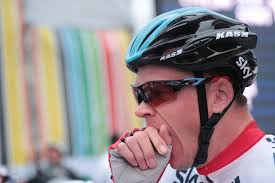
The best evening was in early June. After four hours outside around Jenny’s chiminiere, I pedalled the 11 miles home slightly drunk, mildly stoned and so tired that anyone still awake out in those dark country lanes will have heard the unusual noise of a yawning cyclist. Talk this time had encompassed much description of several psychoactive substances: psilocybin, MDMA, salvia, ayuahasca and DMT. Our various experiences. The consensus non-fear of death, and Buddhism’s benevolences. All sorts of personal reminiscences. And then summaries that tried to pinpoint why we had found Ubuntu, followed by probably the most important question: How can Ubuntu be put into action? Is the very idea of promotion too rooted in the world of corporations and money? Is word of mouth and personal example the way ahead?

I felt like a novice among old hands. It’s one thing to have written a novel about debt and the money system, and another to be so deeply enmeshed in its gears that escape can seem light years away.

My three companions were all following their own paths. Johnnie is teaching himself how to grapple with the shackles of the legal system, and to stave off the seemingly mandatory taxes and levies that come with the modern corporate state.  Jenny has started ‘GetDigginIt’, building a local community around the deployment of unused land to grow food. Walter has arrived at a place where he will naturally barter for many things for which the rest of us reach for our wallets. And he’s good on the bongos.

I was genuinely grateful to have shared a few hours with such people, whose presence I remember far more than the conversations. Blame the substances. I don’t know if any of their ideas can work, but they provide a much-needed counter-balance to the dreary worlds I write about.


5. Sheridan’s scion

OOE 001


You can definitely dance yourself happier. But can you write yourself happier? It takes a certain type, but that’s the over-arching aim, over many blogs. The morning after the first two I awoke with deep serenity, and lay for nearly an hour in a very joyful state. That trend has generally continued.

Maybe the DNA helps. Richard Brinsley Sheridan, who wrote School for Scandal in 1777, was an ancestor. Little gave more pleasure to the younger me than writing long letters to friends.

What has become clear, gazing down the time tunnel, is the bliss that burned within as I wrote, edited and printed my novel ‘Out of Essex’. It started as a rant about the sickening level of praise for Maggie Thatcher in April 2013, after she popped her clogs. Resonating was Frankie Doyle, who complained about the public expenditure on the funeral. He said: “For £3 million you could give everyone in Scotland a shovel, and we could dig a hole so deep we could hand her over to Satan in person.”

Well, Maggie got to meet Satan, and the book steamed along, almost of its own accord. I would wake up each morning with new ideas, most of which seemed to come from my untapped imagination or somewhere beyond. My most exacting work was to go back and research her policies, opening up a whole field of deceit that the BBC and its peers still quietly exclude from the news. In particular, the inter-dependence of war and debt, stretching back across hundreds of years of history. Jesus that led to some interesting discoveries, about money, banking, monarchy and media. In fact Jesus became the key player at the climax, where a moneyless utopia comes into being before Maggie wakes up, in 1966, too groggy to realise she may have been dreaming a future.

What a blast to be a creator. I still grin at the character who threw a punch at a tsunami. Sure there was a lorry load of mistakes – too much polemic, poor writing and insufficient characterisation – but the project made me dreamily contented and cheerful, perhaps more than at any time as an adult. I’ll talk more about OOE in time, but have become aware that my happiness levels dropped off shortly after giving away the sole 50 copies printed for Christmas 2015. Writing that book’s 251 pages energised me and fed my essence.

This blog is focused on truthfulness, rather than creativity. My dad told me to always be truthful. Then punished me with his hand on multiple occasions when I told the truth. The trials of school cemented the path away from truth. From 1993, journalism at least taught me to try and work out the facts, and present them clearly. After OOE, I kept a ‘Happy Diary’ and went on to write down 6 things for which I am grateful each day.

But I backed away from the dark journey, away from serenity, the digging deep into more painful truths, drawing out the poison. Carl Jung wrote his ‘Red Book’ over a period of years, desiring to make his unconscious conscious. Dialoguing with his depths, and then writing truthfully about those inner demons and wraiths as a way to claim and integrate his shadow-self.

Is there a short cut? A huge one-off dose of DMT, psilocybin or ayuahasca? Or perhaps to get wildly drunk and talk about the more repressed or less obvious aspects of one’s personality while a talented painter captures the moment, for an ever-available cathartic portal. Medium-term approaches in seeking happiness include mindfulness. Intentionality is another story, for later.

I’ll round off with a quote from Ursula Le Guin, rapidly becoming a favourite author.

“Many things are not worth doing, but almost anything is worth telling.”

4. Mondeo man

IMG-20180904-WA0000

Time takes it all, whether you want it to, or not.”

Stephen King, The Golden Mile


My daughter Josie and her partner Jackson recently scrapped their car, a blue Ford Mondeo estate which Maureen and I bought brand new in 2000. We handed it across a couple of years ago, after a decade and a half of persistently good service.

Big deal. So what? Well, for me, the scrapping marked the end of an era. The car was totally emblematic of our ‘never-never’ years.

We bought the Mondeo on credit, even though it was clear to me that it would act as a substantial new weight on our monthly expenditure, which was already on the verge of exceeding our income. But it looked robust and powerful, and Maureen loved it. She still recalls the automatic windows. Even as we tipped further into debt over the next few years, at an alarming pace, good old Y56 GWC always started, forever got us from A to B, ferried hordes of kids around before and after school, and had the capacity to haul any amount of crap to the dump, or food from the shops. And it’s 2 litre engine was shit hot from 0-60, never a worry to pull away at a roundabout.

I still grin at how I remembered the registration number. Having been born in March 1957, I tried to see things through my dad’s eyes. Year 56, Good With Cock. Oh the wit of the boy.

The Mondeo underpinned many memories. We took it on the ferry to Noja in northern Spain, where I calmly turned left into a lane where the traffic was heading right. A Spanish driver’s brilliantly executed swerve avoided us all being maimed, or worse. Better recollections involve touring the Peak District, as well as Somerset, Devon, Cornwall, the Isle of Wight and most of East Anglia. In Chelmsford, I sometimes lugged Josie and Rory’s mates around in the boot, enjoying the naughtiness as much as they did. The car took Lauren to and from Cardiff University for three years, and occasionally to Oxford during her PhD studies.

Maureen would make the thing shake and vibrate at traffic lights, by playing the White Stripes and Prodigy at ear-curling noise levels. She said today that she felt more emotional about the Mondeo than any house we have ever lived in. Josie would sit in the front and hang her head out of the window, due to travel sickness. Lauren would always slam the door as she exited. Rory played a Beatles CD over and over one holiday.

Now those days of child-rearing have gone, with Rory now away for large parts of the year at Gloucester University, and Josie and Lauren long flown from the nest. In tandem, the days of credit are also long gone. Not sure that I would pay interest on a loan again without a gun at my ear.

The photo says it all. We are seeing the back of it. There it goes, as the cycle closes. Bye bye old friend. Farewell to mixed times.


3. Freedom on the floor

swing


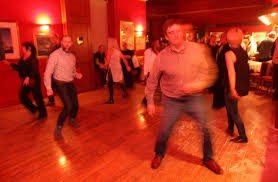
In autumn 1977, aged 20, I discovered that you can dance yourself happier. At an October midweek meeting of Birmingham University’s Northern Soul club. Within minutes of arriving, I was hit by how the blokes let themselves go when they danced, spinning and twisting like shamans to the heavy beat and fast tempos.


Before then, I had wasted countless evenings in discotheques that contained some of the worst predatory rituals conceived in the name of pleasure. Women danced and men ogled from the sides, clutching their beer for the courage needed at the end of the evening, when the mob would move in for the slow dances, grabbing the girls’ arses as they breathed lager fumes to overwhelm the potential victim. In the interim, one of your mates might take a piss in your beer which you had entrusted while taking a slash yourself.


My friend Si Gaze summed up the ambience, as we looked at a female strutting her stuff to Barry White. “I could go right through that,” he proclaimed. Was Si a ghost? Had he learned osmotic meditation techniques? Having checked to see if a Black and Decker drill hung from his baggies, I concluded his intent was carnal.


Northern Soul was a ritual into adulthood, and like all of those, required a little courage. A pint, and then some reconnaissance. It took about five seconds. The boys were out there with the girls, but the lads seemed to be thinking about their steps and movement – in some cases acrobatic back-drops and press-ups – rather than pulling.


The protocol appeared to be that the dancers could do what they liked, alone or in a group. My friends from Stoke and Uttoxeter, Rick Hibbert and Bob Parker, had talked up the fun, but seeing it danced out in action was mind-blowing, exhilarating and of course scary.


The first few steps involved years of self-consciousness vying with the untameable urge to dance freely, leaving behind those misery rituals. It almost immediately reminded me of moving with a football at my feet, in my own way. And there was indeed kit on display. Some magnificent pairs of baggy trousers, tapered to the ankle. Fred Perry tops, or just vests. But the dancing was the thing, to Tamla and Stax classics, James Brown and lesser-known performers like Chuck Wood and Earl Wright.


I got higher and higher, exploring my own avenues of movement. It felt like creating a symphony with my body, while my head went somewhere out into the solar system. I went home with a grin that lasted for days, and a date lined up.


The legacy lasted long after my student days. When Maureen’s nephew Michael got married in the 1990s, I had the floor to myself, at times. The joy was opiate-like. And lasted through the next day. The knee ligaments are knackered now, and muscles pull too easily, but the desire will never fade.


Quid pro quo. You can dance yourself happier.

2. Food for thought

20180915_220251


As a kid, my favourite biscuits were shortbread and digestives.

However the Biscuit Factory was the nickname given to the wing of a UK mental institution in the novel ‘Where my Heart Used to Beat’, by Sebastian Faulks. The time is the 1960s, when the NHS still has wiggle room to experiment clinically, before rigor mortis and the Private Finance Initiative set into its practices and processes.

The narrator and his colleagues decide to strip away previously used categorisations and contexts – such as schizophrenia and Freudian analysis – in favour of relating to the ‘patients’ as humans telling their own truths as best they can.  By sitting under tables with ‘mad’ men and women, and accepting the authenticity of the voices besieging them, some successes are recorded in restoring wider functions of sanity.

There is far more to the book, but the theme of overwhelming empathy encapsulated in the Biscuit Factory struck a chord. It reminded me of the psychologist Carl Rogers, whose credo of healing others was based around an approach of unconditional acceptance, positive regard and comprehensive listening.

For me, tuning into the wavelengths of friends and strangers is a personal skill. But it is rooted in some deep issues of my own around trust and shame, and comes at a price of a lop-sidedness in too many relationships. It has become too easy to provide others with a licence to talk, without insisting on reciprocation. Its inevitable corollary is to cut down my own bandwidth for self-expression, which has tended to find its natural default outlet through the written word.

Trust, shame and other themes will be explored in my own online Biscuit Factory. There is still healing work to do, by openly acknowledging and sharing my many frailties and legacy vulnerabilities. That will be mixed up with humorous asides and positive snapshots of my loves and passions.

Think of it as me wearing my filthiest underpants outside my best trousers.

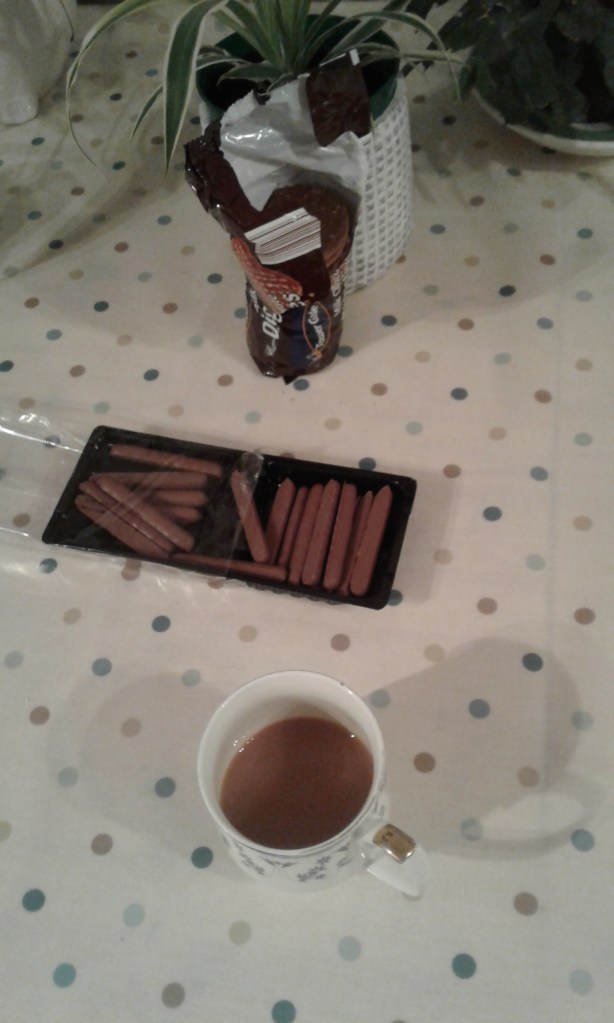
Chocolate finger, anyone?


1. Beginnings

20180130_142157


Day one of my online blog.

I’m hoping that it can upstage the chronic plunge in mood dogging me in the wake of the August 18 wedding of my eldest daughter, Lauren.

A lot of family time and thought flowed into the wedding, which was one of the happiest days of my life. I proudly walked Lauren up the aisle, gave a speech, got very drunk and howled with deep pleasure at the joy of the dodgems, an unusual item which gave the day a never-to-be-forgotten flavour and left tens of wedding-goers with bruised knees.

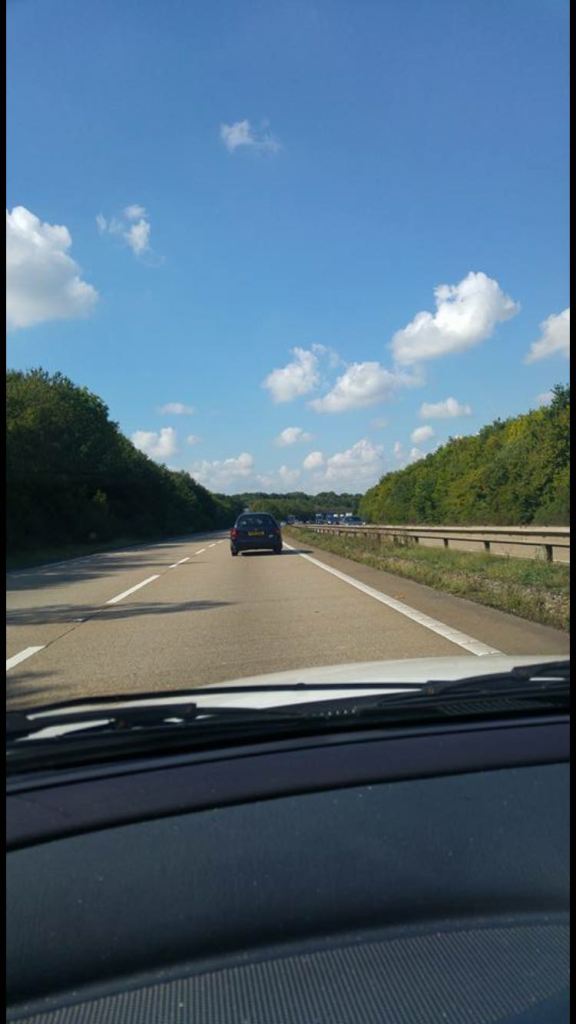
Two days later, Maureen and I took a holiday in the Peak District, extending the afterglow of the deep wedding pleasures across a series of White Peak walks and visits. We relaxed with each other as married couples do when away from the familiar, sleeping long and forgetting what time it was. By the time we were halfway home, in an M1 traffic snarl-up, that feeling had disappeared.

As work and home routines have kicked back in, I feel caged by monotony. Hamster on a wheel. I’m a good journalist, but at 61 have long lost the energy and enthusiasm which once propelled me to start writing at dawn’s crack, and to bang out the words until dusk. It doesn’t help that our money is exhausted post-nuptials. Yet again I owe the taxman a few big ones. A grimmer shadow will be cast by the dark winter days just over the horizon, poised to cut short my therapies of gardening and cycling. Winter is tangibly less enjoyable with each passing year. I have learned to wait for the light to return, and walk to stave off the SAD. Alcohol would once have got me through, but I am wary of its depressive channels, and where they lead. More positively, good sleeps always help, and should become more regular as the nights get colder.

I have known depression before. I staggered through early teenage years at school, wanting the ground to swallow me rather than face more teasing, taunting and humiliations from ‘friends’. I spent the years from 22 to 40 in a haze of misery after a self-inflicted bout of foolishness. I contemplated suicide in Devon 15 years ago, after a protracted and ruinous credit binge, and was on anti-depressants for several months after my mum’s death in 2006.

Yet there are days when the current onslaught seems worse than anything I’ve known. The past always seemed to offer new options, which seem less identifiable this time around.

Which brings me back to the writing. It’s my hope that a few honest paragraphs each day, for possible inspection by others, will significantly lighten the burden. Confession and expression. Don’t think it matters who reads it, if anyone. My bet is that the daily discipline will occupy and motivate me, lighting some kind of path through the coming dark period.